Purchasing commitments and supply execution · Meaning and decision-making
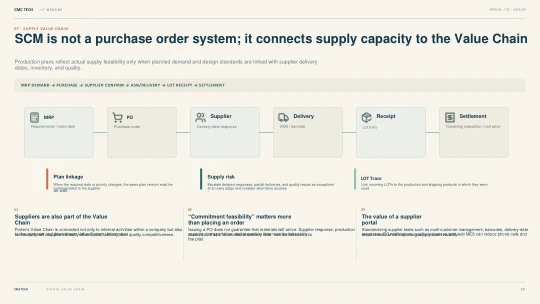
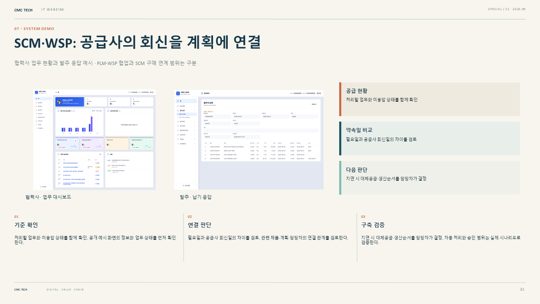
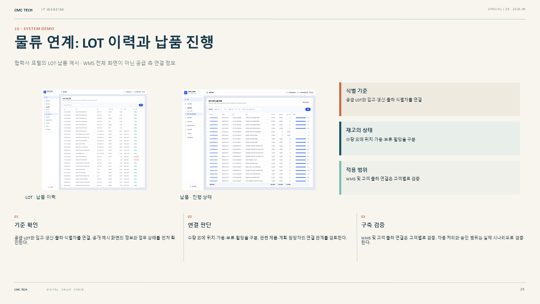
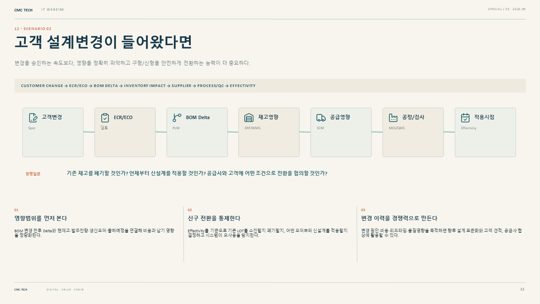
SCM feeds supply availability back into planning. Sending a purchase order does not guarantee that the required materials will arrive by the required date. You must confirm supplier delivery responses, partial deliveries, and the time required for inspection and receipt. The work of notifying suppliers of changes and quality materials through WSP and receiving their responses can also be viewed as part of the same collaboration flow. Change collaboration through PLM and WSP and purchasing linkage through SCM should be designed with their implementation scopes distinguished. Rather than assuming that every connection is already complete functionality, validate them step by step against the actual suppliers' operations and data conditions.
Compare the original and revised commitments for a purchase order, actual receipt, and availability after inspection, and verify the agreement concerning any delay or quantity discrepancy.
Purchasing commitments and supply execution · Execution and validation
When reviewing this chapter’s “SCM Is a System That Connects Supply Capacity to the Value Chain, Not a Purchase Order System,” read purchase orders, supplier responses, delivery dates, shipments, receipts, and inspections using the same criteria. Those responsible for purchasing, suppliers, materials, and quality must check not only the values they enter, but also the information received from the previous step and the status passed to the next step.
Review cases involving changes, cancellations, and omissions alongside normal processing results. Record where judgments differ among purchasing, suppliers, materials, and quality, and agree on who will approve them and on what grounds. Any automation scope that cannot be verified using existing materials should remain on the pre-implementation review list.