CMCTECH · SOLUTION PROPOSAL

Actual MES Results Change the Next Plan

Criteria for Connecting Production Events and Traceability Evidence

Connection CriteriaItems to Check
ProductCheck Entries and Change History on the Same Basis
Manufacturing NumberCheck Entries and Change History on the Same Basis
ProcessesCheck Entries and Change History on the Same Basis
TimestampCheck Entries and Change History on the Same Basis

Production Events and Traceability Evidence · Meaning and Judgment

Planning starts with average conditions, but stoppages, defects, rework, and work delays occur on the shop floor. Comparing MES progress and completed quantities with the plan’s reference time makes it possible to reassess the remaining work and material demand.

Interaction can be described as connecting the instructions and questions needed on the shop floor; poka-yoke as checking incorrect inputs or work conditions; and traceability as leaving evidence of actual execution. Collection items and control scope should be agreed for each process.

For one representative manufacturing number, trace the materials used and inspection results, and conversely compare the range of products affected by a specific material LOT.

Order of On-Site Implementation and Acceptance Testing

  1. Confirm the Roles of Production · Materials · Quality · Customer Response
  2. Compare Product Standards · Source Records
  3. Confirm Exception Handling and Approval Evidence
  4. Validate Results Using a Representative Case

Production Events and Traceability Evidence · Execution and Validation

Automatically reflecting every actual result in replanning can make the schedule excessively unstable. Determine who will review and finalize each variance, and manage the reflection cycle and scope of impact as operating rules.

When reviewing this chapter, “Actual MES Results Change the Next Plan,” read product, manufacturing number, process, timestamp, operator, and material LOT on the same basis. Those responsible for production, materials, quality, and customer response should check not only the values they enter, but also the information received from the previous stage and the status passed to the next stage.

CMC TECH · MES · Quality1 / 41
CMCTECH · SOLUTION PROPOSAL

The Moment a Customer Asks About the Production History of One Product · 1

Comparison with Business Standards

Items to CheckBusiness Process · RecordJudgment · Implementation Criteria
Process SequenceInterpret the Code List and Check Equipment SeparatelyCheck the Registered Equipment Layout and Product Results Together
Production History of the Semi-Finished ProductCopy the Number and Search SeparatelyFollow the Input Relationships to Expand the Process on the Same Screen
Location of the Material ProblemReinvestigate Where Used from the Full Material ListCheck Input Locations, LOTs, and Quantities by Process and Equipment

Production Events and Traceability Evidence · Meaning and Judgment

Even when a product’s process codes and timestamps exist on multiple screens, customer responses remain manual if personnel must reconcile the relationships again. The starting point of this proposal is confirming the connections among finished products, semi-finished products, materials, inspections, and repairs as the flow of a single product.

The goal is not simply to display more data. It is to allow users to drill down to the necessary records without losing the product being queried and to explain the evidence on which a judgment was based.

Implementation Check Before implementation, record where the current inquiry stops and which person and screen are used to check it again, using one representative product.

Comparison with Business Standards

Items to CheckBusiness Process · RecordJudgment · Implementation Criteria
Actions After a DefectCompile Repair Reports and Retest Results SeparatelyLink Defects · Repairs · Retests under the Relevant Equipment

Production Events and Traceability Evidence · Execution and Validation

The review items for “Process Sequence” are as follows. Business process · Record: Interpret the code list and check equipment separately; Judgment · Implementation Criteria: Check the registered equipment layout and product results together.

The review items for “Production History of the Semi-Finished Product” are as follows. Business process · Record: Copy the number and search separately; Judgment · Implementation Criteria: Follow the input relationships to expand the process on the same screen.

The review items for “Location of the Material Issue” are as follows. Work and records: Reinvestigate where materials are used across the full material list; decision and implementation criteria: Confirm input locations by process and equipment, as well as LOTs and quantities.

CMC TECH · MES · Quality2 / 41
CMCTECH · SOLUTION PROPOSAL

The moment a customer asks about the production history of a single product · 2

Criteria for Connecting Production Events and Traceability Evidence

Connection CriteriaItems to Check
ProductCheck Entries and Change History on the Same Basis
Manufacturing NumberCheck Entries and Change History on the Same Basis
ProcessesCheck Entries and Change History on the Same Basis
TimestampCheck Entries and Change History on the Same Basis

Production Events and Traceability Evidence · Meaning and Judgment

The review items for “Actions After a Defect” are as follows. Work and records: Compile repair reports and reinspection results separately; decision and implementation criteria: Link defects, repairs, and reinspections under the relevant equipment.

The production history cannot be reconstructed from the current status alone. Input, replacement, inspection, hold, repair, and reinspection must be recorded as separate events, with the relationships between upstream and downstream semi-finished products and the original product linked together.

For one representative manufacturing number, trace the materials used and inspection results, and conversely compare the range of products affected by a specific material LOT.

Order of On-Site Implementation and Acceptance Testing

  1. Confirm the Roles of Production · Materials · Quality · Customer Response
  2. Compare Product Standards · Source Records
  3. Confirm Exception Handling and Approval Evidence
  4. Validate Results Using a Representative Case

Production Events and Traceability Evidence · Execution and Validation

When reviewing “The Moment a Customer Asks About the Production History of a Single Product” in this chapter, product, manufacturing number, process, time, operator, and material LOT must be interpreted using the same criteria. Those responsible for production, materials, quality, and customer response must verify not only the values they enter, but also the information received from the previous step and the status passed to the next step.

Confirm cases involving changes, cancellations, or omissions alongside normal processing results. Record where judgments differ between production, materials, quality, and customer response, and agree on who will approve them and on what basis. Any scope of automation that cannot be verified from existing materials should remain a review item before implementation.
CMC TECH · MES · Quality3 / 41
CMCTECH · SOLUTION PROPOSAL

CMC MES and Graphical Production History Traceability: Proposal Scope · 1

Comparison with Business Standards

Items to CheckBusiness Process · RecordJudgment · Implementation Criteria
Verified in the provided materialsCode and instruction lookup, equipment-specific history, semi-finished product expansionDescription of the current functions in this proposal
Verified in the provided materialsMaterial LOTs and quantities by process, repair details, reinspection, outputIntroduce in connection with the actual screens
Customer-specific implementation reviewEquipment interfaces, collection items, identification relationships, exception handlingFinalize the applicable scope through on-site investigation and demonstrations

Production Events and Traceability Evidence · Meaning and Judgment

CMC MES links processes, equipment, operators, material input, inspections, repairs, and semi-finished products based on product identification and production performance data collection. Graphical production history traceability is a lookup method for verifying these links using the actual equipment layout and process sequence.

“Perfect traceability” is not an unconditional guarantee that no records will ever be missing. The implementation objective is to define the required scope of links, compare source records with the screens, and supplement any uncollected segments to create a state that can be explained from beginning to end.

Separate the implementation validation demonstration, interface list, and acceptance items, and agree on the contract scope and completion criteria.

Comparison with Business Standards

Items to CheckBusiness Process · RecordJudgment · Implementation Criteria
Requires separate validationAutomatic shipment blocking, automatic retrieval and disposal, immediate connection of all equipmentDo not claim that implementation is complete based solely on the materials

Production Events and Traceability Evidence · Execution and Validation

The review items for “Verified in the Provided Materials” are as follows. Work and records: Code and instruction lookup, equipment-specific history, semi-finished product expansion; decision and implementation criteria: Description of the current functions in this proposal.

The review items for “Verified in the Provided Materials” are as follows. Work and records: Material LOTs and quantities by process, repair details, reinspection, output; decision and implementation criteria: Introduce in connection with the actual screens.

The review items for “Customer-Specific Implementation Review” are as follows. Work and records: Equipment interfaces, collection items, identification relationships, exception handling; decision and implementation criteria: Finalize the applicable scope through on-site investigation and demonstrations.

CMC TECH · MES · Quality4 / 41
CMCTECH · SOLUTION PROPOSAL

CMC MES and Graphical Production History Traceability: Proposal Scope · 2

Criteria for Connecting Production Events and Traceability Evidence

Connection CriteriaItems to Check
ProductCheck Entries and Change History on the Same Basis
Manufacturing NumberCheck Entries and Change History on the Same Basis
ProcessesCheck Entries and Change History on the Same Basis
TimestampCheck Entries and Change History on the Same Basis

Production Events and Traceability Evidence · Meaning and Judgment

The review items for “Requires Separate Validation” are as follows. Work and records: Automatic shipment blocking, automatic retrieval and disposal, immediate connection of all equipment; decision and implementation criteria: Do not claim that implementation is complete based solely on the materials.

The production history cannot be reconstructed from the current status alone. Input, replacement, inspection, hold, repair, and reinspection must be recorded as separate events, with the relationships between upstream and downstream semi-finished products and the original product linked together.

For one representative manufacturing number, trace the materials used and inspection results, and conversely compare the range of products affected by a specific material LOT.

Order of On-Site Implementation and Acceptance Testing

  1. Confirm the Roles of Production · Materials · Quality · Customer Response
  2. Compare Product Standards · Source Records
  3. Confirm Exception Handling and Approval Evidence
  4. Validate Results Using a Representative Case

Production Events and Traceability Evidence · Execution and Validation

When reviewing “CMC MES and Graphical Production History Traceability: Proposal Scope” in this chapter, product, manufacturing number, process, time, operator, and material LOT must be interpreted using the same criteria. Those responsible for production, materials, quality, and customer response must verify not only the values they enter, but also the information received from the previous step and the status passed to the next step.

Confirm cases involving changes, cancellations, or omissions alongside normal processing results. Record where judgments differ between production, materials, quality, and customer response, and agree on who will approve them and on what basis. Any scope of automation that cannot be verified from existing materials should remain a review item before implementation.
CMC TECH · MES · Quality5 / 41
CMCTECH · SOLUTION PROPOSAL

A Consistent Usage Flow for Lookup, Selection, Process, and Details · 1

Comparison with Business Standards

Items to CheckBusiness Process · RecordJudgment · Implementation Criteria
1. LookupProduct code or production instructionFinalize the criteria for finding the target
2. SelectionModel, current step, status, input and completion timesDistinguish other targets with the same name or related codes
3. Process VerificationStep summary and performance by equipmentDetermine the location of the event to be verified
4. Detail VerificationMaterials, repairs, downstream semi-finished productsVerify the basis for the judgment and the scope of the links

Production Events and Traceability Evidence · Meaning and Judgment

If all records are expanded from the beginning, the event you are looking for can get buried. Set the scope using the product or instruction, locate it within the overall process, and then expand the necessary details.

A customer response can start with a single product, while an on-site progress check can start with an entire production instruction. Even when the starting conditions differ, the same product identification relationships are maintained during detailed verification.

Implementation validation: When the same product is looked up from the two starting points, verify that identical process, material, and inspection histories are displayed.

Order of On-Site Implementation and Acceptance Testing

  1. Confirm the Roles of Production · Materials · Quality · Customer Response
  2. Compare Product Standards · Source Records
  3. Confirm Exception Handling and Approval Evidence
  4. Validate Results Using a Representative Case

Production Events and Traceability Evidence · Execution and Validation

The review items for “1. Lookup” are as follows. Work and records: Product code or production instruction; decision and implementation criteria: Finalize the criteria for finding the target.

The review items for “2. Selection” are as follows. Work and records: Model, current step, status, input and completion times; decision and implementation criteria: Distinguish other targets with the same name or related codes.

The review items for “3. Process Verification” are as follows. Work and records: Step summary and performance by equipment; decision and implementation criteria: Determine the location of the event to be verified.

CMC TECH · MES · Quality6 / 41
CMCTECH · SOLUTION PROPOSAL

A Consistent Usage Flow for Lookup, Selection, Process, and Details · 2

Criteria for Connecting Production Events and Traceability Evidence

Connection CriteriaItems to Check
ProductCheck Entries and Change History on the Same Basis
Manufacturing NumberCheck Entries and Change History on the Same Basis
ProcessesCheck Entries and Change History on the Same Basis
TimestampCheck Entries and Change History on the Same Basis

Production Events and Traceability Evidence · Meaning and Judgment

The review items for “4. Detail Verification” are as follows. Work and records: Materials, repairs, downstream semi-finished products; decision and implementation criteria: Verify the basis for the judgment and the scope of the links.

The production history cannot be reconstructed from the current status alone. Input, replacement, inspection, hold, repair, and reinspection must be recorded as separate events, with the relationships between upstream and downstream semi-finished products and the original product linked together.

For one representative manufacturing number, trace the materials used and inspection results, and conversely compare the range of products affected by a specific material LOT.

Order of On-Site Implementation and Acceptance Testing

  1. Confirm the Roles of Production · Materials · Quality · Customer Response
  2. Compare Product Standards · Source Records
  3. Confirm Exception Handling and Approval Evidence
  4. Validate Results Using a Representative Case

Production Events and Traceability Evidence · Execution and Validation

When reviewing “A Consistent Usage Flow for Lookup, Selection, Process, and Details” in this chapter, product, manufacturing number, process, time, operator, and material LOT must be interpreted using the same criteria. Those responsible for production, materials, quality, and customer response must verify not only the values they enter, but also the information received from the previous step and the status passed to the next step.

Confirm cases involving changes, cancellations, or omissions alongside normal processing results. Record where judgments differ between production, materials, quality, and customer response, and agree on who will approve them and on what basis. Any scope of automation that cannot be verified from existing materials should remain a review item before implementation.
CMC TECH · MES · Quality7 / 41
CMCTECH · SOLUTION PROPOSAL

Find Using Multiple Codes, but Maintain a Single Product Identity · 1

Comparison with Business Standards

Items to CheckBusiness Process · RecordJudgment · Implementation Criteria
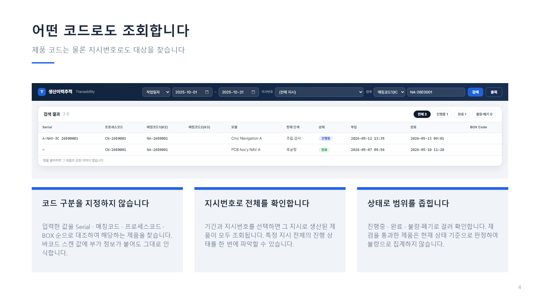
Product identification codeSerial, matching code, process codeVerify which actual product the related code refers to
Package identificationBOX codeVerify the scope of the link between the box and its component products
Instruction lookupPeriod and production instructionVerify the production targets and status for the instruction

Production Events and Traceability Evidence · Meaning and Judgment

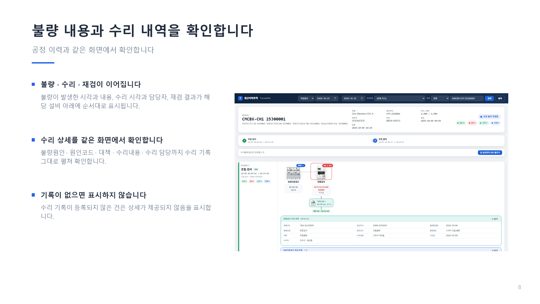
The introductory materials explain lookup by cross-checking Serial, matching code, process code, and BOX in sequence, as well as looking up a product list by period and instruction number. This reduces the burden of first selecting the appropriate code type.

Do not state that all label formats and reissue rules are automatically supported without prior verification. Validate code interpretation and target selection using on-site samples, and agree on how relationships will be preserved when codes change.

Implementation validation: Organize the expected results for valid codes, related codes, unregistered codes, and scanned values containing additional information.

Comparison with Business Standards

Items to CheckBusiness Process · RecordJudgment · Implementation Criteria
Additional scan informationActual barcode samples from the siteVerify recognizable formats and exception values through demonstrations

Production Events and Traceability Evidence · Execution and Validation

The review items for “Product Identification Code” are as follows. Work and records: Serial, matching code, process code; decision and implementation criteria: Verify which actual product the related code refers to.

The review items for “Package Identification” are as follows. Work and records: BOX code; decision and implementation criteria: Verify the scope of the link between the box and its component products.

The review items for “Instruction Lookup” are as follows. Work and records: Period and production instruction; decision and implementation criteria: Verify the production targets and status for the instruction.

CMC TECH · MES · Quality8 / 41
CMCTECH · SOLUTION PROPOSAL

Find Using Multiple Codes, but Maintain a Single Product Identity · 2

Provided Introduction, Chapter 4 · Find Using Multiple Codes, but Maintain a Single Product Identity

Provided Introduction, Chapter 4 · Find Using Multiple Codes, but Maintain a Single Product Identity
Previously Published Demonstration Materials · Implementation Screens and Scope to Be Finalized After Business Review

Production Events and Traceability Evidence · Meaning and Judgment

The review items for “Additional Scan Information” are as follows. Work and records: Actual barcode samples from the site; decision and implementation criteria: Verify recognizable formats and exception values through demonstrations.

The production history cannot be reconstructed from the current status alone. Input, replacement, inspection, hold, repair, and reinspection must be recorded as separate events, with the relationships between upstream and downstream semi-finished products and the original product linked together.

For one representative manufacturing number, trace the materials used and inspection results, and conversely compare the range of products affected by a specific material LOT.

Order of On-Site Implementation and Acceptance Testing

  1. Confirm the Roles of Production · Materials · Quality · Customer Response
  2. Compare Product Standards · Source Records
  3. Confirm Exception Handling and Approval Evidence
  4. Validate Results Using a Representative Case

Production Events and Traceability Evidence · Execution and Validation

When reviewing “Find Using Multiple Codes, but Maintain a Single Product Identity” in this chapter, product, manufacturing number, process, time, operator, and material LOT must be interpreted using the same criteria. Those responsible for production, materials, quality, and customer response must verify not only the values they enter, but also the information received from the previous step and the status passed to the next step.

Confirm cases involving changes, cancellations, or omissions alongside normal processing results. Record where judgments differ between production, materials, quality, and customer response, and agree on who will approve them and on what basis. Any scope of automation that cannot be verified from existing materials should remain a review item before implementation.
CMC TECH · MES · Quality9 / 41
CMCTECH · SOLUTION PROPOSAL

Read the Current Status Together with Past Events · 1

Comparison with Business Standards

Items to CheckBusiness Process · RecordJudgment · Implementation Criteria
Current statusThe product’s current statusUsed to determine whether it is in progress, complete, or defective
Past defectWhere and what type of defect occurredUsed to analyze the circumstances and identify improvements
Repair historyWhat action was takenVerify the person responsible, details, and time
Reinspection resultHow the inspection concluded after the actionVerify as the basis for the current status

Production Events and Traceability Evidence · Meaning and Judgment

Narrow the targets to in progress, complete, defective, or disposed, while distinguishing past defect events from the current product status. The materials explain that products passing reinspection are classified according to their current status and are not counted as defective.

Do not hide past events through reinspection approval, and do not mistake the number of past defect occurrences for the number of currently defective products. Confirm the aggregation unit and status determination criteria together with the actual operating rules.

Implementation validation: Prepare examples of normal completion, an unresolved defect, reinspection approval after repair, and disposal, and compare the lists with the details.

Order of On-Site Implementation and Acceptance Testing

  1. Confirm the Roles of Production · Materials · Quality · Customer Response
  2. Compare Product Standards · Source Records
  3. Confirm Exception Handling and Approval Evidence
  4. Validate Results Using a Representative Case

Production Events and Traceability Evidence · Execution and Validation

The review items for “Current Status” are as follows. Work and records: The product’s current status; decision and implementation criteria: Used to determine whether it is in progress, complete, or defective.

The review items for “Past Defect” are as follows. Work and records: Where and what type of defect occurred; decision and implementation criteria: Used to analyze the circumstances and identify improvements.

The review points for “Repair History” are as follows. Work and records: what action was taken; decision and implementation criteria: verify the person in charge, details, and time.

CMC TECH · MES · Quality10 / 41
CMCTECH · SOLUTION PROPOSAL

Read the current status and past events together · 2

Criteria for Connecting Production Events and Traceability Evidence

Connection CriteriaItems to Check
ProductCheck Entries and Change History on the Same Basis
Manufacturing NumberCheck Entries and Change History on the Same Basis
ProcessesCheck Entries and Change History on the Same Basis
TimestampCheck Entries and Change History on the Same Basis

Production Events and Traceability Evidence · Meaning and Judgment

The review points for “Retest Results” are as follows. Work and records: how the inspection concluded after the action; decision and implementation criteria: verify it as the basis for the current status.

The production history cannot be reconstructed from the current status alone. Input, replacement, inspection, hold, repair, and reinspection must be recorded as separate events, with the relationships between upstream and downstream semi-finished products and the original product linked together.

For one representative manufacturing number, trace the materials used and inspection results, and conversely compare the range of products affected by a specific material LOT.

Order of On-Site Implementation and Acceptance Testing

  1. Confirm the Roles of Production · Materials · Quality · Customer Response
  2. Compare Product Standards · Source Records
  3. Confirm Exception Handling and Approval Evidence
  4. Validate Results Using a Representative Case

Production Events and Traceability Evidence · Execution and Validation

When reviewing “Read the current status and past events together” in this chapter, read the product, serial number, process, time, operator, and material LOT using the same criteria. Personnel responsible for production, materials, quality, and customer response verify not only the values they enter, but also the information received from the preceding step and the status to be passed to the next step.

Confirm cases involving changes, cancellations, or omissions alongside normal processing results. Record where judgments differ between production, materials, quality, and customer response, and agree on who will approve them and on what basis. Any scope of automation that cannot be verified from existing materials should remain a review item before implementation.
CMC TECH · MES · Quality11 / 41
CMCTECH · SOLUTION PROPOSAL

Check production records at the locations of the actual equipment · 1

Comparison with Business Standards

Items to CheckBusiness Process · RecordJudgment · Implementation Criteria
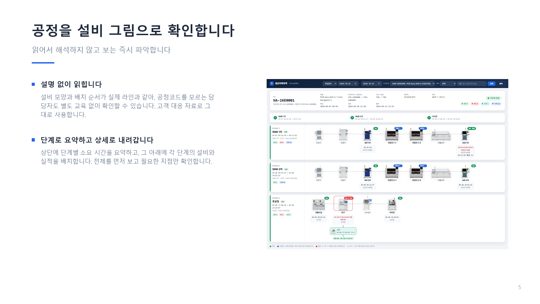
Step summaryOverall route and time by stepDecide which section to examine in detail
Equipment layoutRegistered process sequence and equipmentVerify the correspondence between the shop floor and the screen
Production record locationTime, operator, and result under the relevant equipmentVerify the events that actually occurred for the product

Production Events and Traceability Evidence · Meaning and Judgment

Summarize the time required for each step and place the equipment and production records below it. Instead of memorizing process codes, understand the product’s progress through the shape and location of the equipment.

The meaning of the graphics becomes clear only when the process configuration and equipment registration match the actual shop floor. Equipment illustrations are not decoration; they provide location information for tracing events by product. The registration criteria must also be managed when equipment is replaced or lines are changed.

Implementation check: review the equipment names, layout sequence, and production record locations together with the shop-floor personnel. Do not replace unregistered equipment with arbitrary example illustrations.

Comparison with Business Standards

Items to CheckBusiness Process · RecordJudgment · Implementation Criteria
Expand detailsMaterials, repairs, and semi-finished productsReview while maintaining the context of a single product

Production Events and Traceability Evidence · Execution and Validation

The review points for “Step Summary” are as follows. Work and records: overall route and time by step; decision and implementation criteria: decide which section to examine in detail.

The review points for “Equipment Layout” are as follows. Work and records: registered process sequence and equipment; decision and implementation criteria: verify the correspondence between the shop floor and the screen.

The review points for “Production Record Location” are as follows. Work and records: time, operator, and result under the relevant equipment; decision and implementation criteria: verify the events that actually occurred for the product.

CMC TECH · MES · Quality12 / 41
CMCTECH · SOLUTION PROPOSAL

Check production records at the locations of the actual equipment · 2

Provided brochure, Chapter 5 · Check production records at the locations of the actual equipment

Provided brochure, Chapter 5 · Check production records at the locations of the actual equipment
Previously Published Demonstration Materials · Implementation Screens and Scope to Be Finalized After Business Review

Production Events and Traceability Evidence · Meaning and Judgment

The review points for “Expand Details” are as follows. Work and records: materials, repairs, and semi-finished products; decision and implementation criteria: review while maintaining the context of a single product.

The production history cannot be reconstructed from the current status alone. Input, replacement, inspection, hold, repair, and reinspection must be recorded as separate events, with the relationships between upstream and downstream semi-finished products and the original product linked together.

For one representative manufacturing number, trace the materials used and inspection results, and conversely compare the range of products affected by a specific material LOT.

Order of On-Site Implementation and Acceptance Testing

  1. Confirm the Roles of Production · Materials · Quality · Customer Response
  2. Compare Product Standards · Source Records
  3. Confirm Exception Handling and Approval Evidence
  4. Validate Results Using a Representative Case

Production Events and Traceability Evidence · Execution and Validation

When reviewing “Check production records at the locations of the actual equipment” in this chapter, read the product, serial number, process, time, operator, and material LOT using the same criteria. Personnel responsible for production, materials, quality, and customer response verify not only the values they enter, but also the information received from the preceding step and the status to be passed to the next step.

Confirm cases involving changes, cancellations, or omissions alongside normal processing results. Record where judgments differ between production, materials, quality, and customer response, and agree on who will approve them and on what basis. Any scope of automation that cannot be verified from existing materials should remain a review item before implementation.
CMC TECH · MES · Quality13 / 41
CMCTECH · SOLUTION PROPOSAL

Distinguish between connected lines and independent workstations · 1

Comparison with Business Standards

Items to CheckBusiness Process · RecordJudgment · Implementation Criteria
SMTContinuous lines and production records by equipmentDistinguish line-wide responsibilities from equipment events
ICT · RoutingIndependent workstation possibleIndividually link each piece of equipment with its operator and work time
Insert · CoatingApplicability and sequence vary by productCompare the registered route with the actual passage

Production Events and Traceability Evidence · Meaning and Judgment

SMT can be operated as a connected line, but ICT, routing, coating inspection, and assembly·EOL may be separate workstations or different lines. Lines on the screen represent the product’s progression relationships and do not uniformly indicate physical conveyor connections.

This table provides criteria for distinguishing shop-floor designs; it is not a fixed sequence applied to all electronic products. First verify the actual route of a single product, then arrange the equipment.

Implementation check: verify the physical layout and the product’s process sequence separately, and review whether the two concepts have been kept distinct.

Comparison with Business Standards

Items to CheckBusiness Process · RecordJudgment · Implementation Criteria
Assembly · EOLSeparate line and inspection configuration possibleLink semi-finished product input with final inspection

Production Events and Traceability Evidence · Execution and Validation

The review points for “SMT” are as follows. Work and records: continuous line and production records by equipment; decision and implementation criteria: distinguish line-wide responsibilities from equipment events.

The review points for “ICT·Routing” are as follows. Work and records: independent workstation possible; decision and implementation criteria: individually link each piece of equipment with its operator and work time.

The review points for “Insert·Coating” are as follows. Work and records: applicability and sequence vary by product; decision and implementation criteria: compare the registered route with the actual passage.

CMC TECH · MES · Quality14 / 41
CMCTECH · SOLUTION PROPOSAL

Distinguish between connected lines and independent workstations · 2

Criteria for Connecting Production Events and Traceability Evidence

Connection CriteriaItems to Check
ProductCheck Entries and Change History on the Same Basis
Manufacturing NumberCheck Entries and Change History on the Same Basis
ProcessesCheck Entries and Change History on the Same Basis
TimestampCheck Entries and Change History on the Same Basis

Production Events and Traceability Evidence · Meaning and Judgment

The review points for “Assembly·EOL” are as follows. Work and records: separate line and inspection configuration possible; decision and implementation criteria: link semi-finished product input with final inspection.

The production history cannot be reconstructed from the current status alone. Input, replacement, inspection, hold, repair, and reinspection must be recorded as separate events, with the relationships between upstream and downstream semi-finished products and the original product linked together.

For one representative manufacturing number, trace the materials used and inspection results, and conversely compare the range of products affected by a specific material LOT.

Order of On-Site Implementation and Acceptance Testing

  1. Confirm the Roles of Production · Materials · Quality · Customer Response
  2. Compare Product Standards · Source Records
  3. Confirm Exception Handling and Approval Evidence
  4. Validate Results Using a Representative Case

Production Events and Traceability Evidence · Execution and Validation

When reviewing “Distinguish between connected lines and independent workstations” in this chapter, read the product, serial number, process, time, operator, and material LOT using the same criteria. Personnel responsible for production, materials, quality, and customer response verify not only the values they enter, but also the information received from the preceding step and the status to be passed to the next step.

Confirm cases involving changes, cancellations, or omissions alongside normal processing results. Record where judgments differ between production, materials, quality, and customer response, and agree on who will approve them and on what basis. Any scope of automation that cannot be verified from existing materials should remain a review item before implementation.
CMC TECH · MES · Quality15 / 41
CMCTECH · SOLUTION PROPOSAL

Link operators and quantities according to the criteria applicable at the time · 1

Comparison with Business Standards

Items to CheckBusiness Process · RecordJudgment · Implementation Criteria
Operator identificationOperator ID and, if necessary, nameDistinguish SMT line-wide assignment from independent workstation assignment
Assignment timingTime of shift or assignment changeVerify the person responsible at the time the product passed through
Work timeInput, completion, inspection, and repair timesClearly indicate what event the time refers to

Production Events and Traceability Evidence · Meaning and Judgment

The operator ID and production record for the time the queried product passed through are required. If the current equipment operator is applied to past history or records are overwritten after a shift change, it becomes difficult to explain what actually happened during the work.

Do not assume that productivity calculations by operator or automatic assignment of all equipment are standard features. Confirm the required history level and the items that can be collected during implementation.

Implementation check: compare products from before and after a shift and products recorded by different inspection or routing personnel to verify the identification links.

Comparison with Business Standards

Items to CheckBusiness Process · RecordJudgment · Implementation Criteria
Production quantityOrdered quantity · passed quantity · quantity usedDistinguish the aggregation target and unit

Production Events and Traceability Evidence · Execution and Validation

The review points for “Operator Identification” are as follows. Work and records: operator ID and, if necessary, name; decision and implementation criteria: distinguish SMT line-wide assignment from independent workstation assignment.

The review points for “Assignment Timing” are as follows. Work and records: time of shift or assignment change; decision and implementation criteria: verify the person responsible at the time the product passed through.

The review points for “Work Time” are as follows. Work and records: input, completion, inspection, and repair times; decision and implementation criteria: clearly indicate what event the time refers to.

CMC TECH · MES · Quality16 / 41
CMCTECH · SOLUTION PROPOSAL

Link operators and quantities according to the criteria applicable at the time · 2

Criteria for Connecting Production Events and Traceability Evidence

Connection CriteriaItems to Check
ProductCheck Entries and Change History on the Same Basis
Manufacturing NumberCheck Entries and Change History on the Same Basis
ProcessesCheck Entries and Change History on the Same Basis
TimestampCheck Entries and Change History on the Same Basis

Production Events and Traceability Evidence · Meaning and Judgment

The review points for “Production Quantity” are as follows. Work and records: ordered quantity, passed quantity, and quantity used; decision and implementation criteria: distinguish the aggregation target and unit.

The production history cannot be reconstructed from the current status alone. Input, replacement, inspection, hold, repair, and reinspection must be recorded as separate events, with the relationships between upstream and downstream semi-finished products and the original product linked together.

For one representative manufacturing number, trace the materials used and inspection results, and conversely compare the range of products affected by a specific material LOT.

Order of On-Site Implementation and Acceptance Testing

  1. Confirm the Roles of Production · Materials · Quality · Customer Response
  2. Compare Product Standards · Source Records
  3. Confirm Exception Handling and Approval Evidence
  4. Validate Results Using a Representative Case

Production Events and Traceability Evidence · Execution and Validation

When reviewing “Link operators and quantities according to the criteria applicable at the time” in this chapter, read the product, serial number, process, time, operator, and material LOT using the same criteria. Personnel responsible for production, materials, quality, and customer response verify not only the values they enter, but also the information received from the preceding step and the status to be passed to the next step.

Confirm cases involving changes, cancellations, or omissions alongside normal processing results. Record where judgments differ between production, materials, quality, and customer response, and agree on who will approve them and on what basis. Any scope of automation that cannot be verified from existing materials should remain a review item before implementation.

CMC TECH · MES · Quality17 / 41
CMCTECH · SOLUTION PROPOSAL

Which equipment used which material LOT? · 1

Comparison with Business Standards

Items to CheckBusiness Process · RecordJudgment · Implementation Criteria
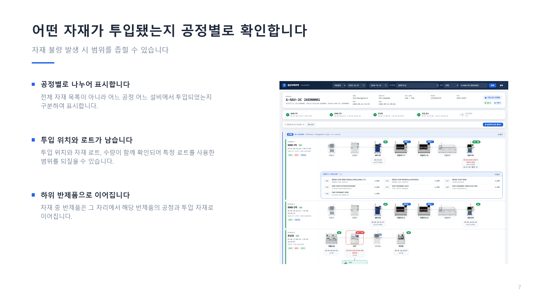
Material itemWhat was used?Distinguish different LOTs of the same item
Input locationIn which process or on which equipment was it used?Link the product route with the usage location
Material LOTWhich production or management unit was it?Investigate the scope of use of the same LOT
QuantityHow much was recorded, and according to what criteria?Verify the meaning, such as mounted, used, or remaining quantity

Production Events and Traceability Evidence · Meaning and Judgment

Move beyond the overall materials list and link material LOTs and quantities to the input locations for each process and piece of equipment. This provides the basis for verifying the actual usage location when investigating material defects.

The planned materials registered in the BOM differ from the materials actually input. Do not confirm a material as part of the product’s usage history merely because it was scheduled for use.

Implementation check: compare the actual material input records with the item, LOT, location, and quantity shown on the screen. For semi-finished items, also verify whether they are linked to their production history.

Provided brochure, Chapter 7 · Which equipment used which material LOT?

Provided brochure, Chapter 7 · Which equipment used which material LOT?
Previously Published Demonstration Materials · Implementation Screens and Scope to Be Finalized After Business Review

Production Events and Traceability Evidence · Execution and Validation

The review points for “Material Item” are as follows. Work and records: what was used; decision and implementation criteria: distinguish different LOTs of the same item.

The review points for “Input Location” are as follows. Work and records: in which process or on which equipment was it used; decision and implementation criteria: link the product route with the usage location.

The review points for “Material LOT” are as follows. Work and records: which production or management unit was it; decision and implementation criteria: investigate the scope of use of the same LOT.

CMC TECH · MES · Quality18 / 41
CMCTECH · SOLUTION PROPOSAL

Which equipment used which material LOT · 2

Criteria for Connecting Production Events and Traceability Evidence

Connection CriteriaItems to Check
ProductCheck Entries and Change History on the Same Basis
Manufacturing NumberCheck Entries and Change History on the Same Basis
ProcessesCheck Entries and Change History on the Same Basis
TimestampCheck Entries and Change History on the Same Basis

Production Events and Traceability Evidence · Meaning and Judgment

The review points for “Quantity” are as follows. Operations and records: What was recorded, and according to what criteria? Evaluation and implementation criteria: Confirm the meaning of such details as loaded quantity, used quantity, and remaining quantity.

The production history cannot be reconstructed from the current status alone. Input, replacement, inspection, hold, repair, and reinspection must be recorded as separate events, with the relationships between upstream and downstream semi-finished products and the original product linked together.

For one representative manufacturing number, trace the materials used and inspection results, and conversely compare the range of products affected by a specific material LOT.

Order of On-Site Implementation and Acceptance Testing

  1. Confirm the Roles of Production · Materials · Quality · Customer Response
  2. Compare Product Standards · Source Records
  3. Confirm Exception Handling and Approval Evidence
  4. Validate Results Using a Representative Case

Production Events and Traceability Evidence · Execution and Validation

When reviewing this chapter’s “Which equipment used which material LOT,” read the product, serial number, process, time, operator, and material LOT according to the same criteria. Personnel responsible for production, materials, quality, and customer response must verify not only the values they enter but also the information received from the preceding step and the status passed to the next step.

Confirm cases involving changes, cancellations, or omissions alongside normal processing results. Record where judgments differ between production, materials, quality, and customer response, and agree on who will approve them and on what basis. Any scope of automation that cannot be verified from existing materials should remain a review item before implementation.

CMC TECH · MES · Quality19 / 41
CMCTECH · SOLUTION PROPOSAL

Validate the boundary between LOT changes and substitute materials · 1

Comparison with Business Standards

Items to CheckBusiness Process · RecordJudgment · Implementation Criteria
Products before the LOT changePrevious LOT and input locationCompare source records with linkage results
Products after the LOT changeChanged LOT and time of applicationConfirm that the previous LOT is no longer linked
Substitute materialsApproval criteria and actual inputDo not mistake planned materials for materials actually used

Production Events and Traceability Evidence · Meaning and Judgment

Even for the same item, the reel or LOT may change during production. If it is not possible to determine through which product the previous LOT was used, the scope of impact may become excessively broad.

This is a proposal for implementation validation. A live demonstration must confirm the level at which LOT boundaries can actually be distinguished, depending on equipment logs and the units used to collect production results.

Implementation validation Do not finish acceptance testing with just one normal production run; test before-and-after replacement cases and exceptions involving missing records.

Comparison with Business Standards

Items to CheckBusiness Process · RecordJudgment · Implementation Criteria
Part replacement during repairRepair records and required material historyConfirm the collection scope separately for each customer

Production Events and Traceability Evidence · Execution and Validation

The review points for “Products before the LOT change” are as follows. Operations and records: Previous LOT and input location; evaluation and implementation criteria: Compare source records with linkage results.

The review points for “Products after the LOT change” are as follows. Operations and records: Changed LOT and time of application; evaluation and implementation criteria: Confirm that the previous LOT is no longer linked.

The review points for “Substitute materials” are as follows. Operations and records: Approval criteria and actual input; evaluation and implementation criteria: Do not mistake planned materials for materials actually used.

CMC TECH · MES · Quality20 / 41
CMCTECH · SOLUTION PROPOSAL

Validate the boundary between LOT changes and substitute materials · 2

Criteria for Connecting Production Events and Traceability Evidence

Connection CriteriaItems to Check
ProductCheck Entries and Change History on the Same Basis
Manufacturing NumberCheck Entries and Change History on the Same Basis
ProcessesCheck Entries and Change History on the Same Basis
TimestampCheck Entries and Change History on the Same Basis

Production Events and Traceability Evidence · Meaning and Judgment

The review points for “Part replacement during repair” are as follows. Operations and records: Repair records and required material history; evaluation and implementation criteria: Confirm the collection scope separately for each customer.

The production history cannot be reconstructed from the current status alone. Input, replacement, inspection, hold, repair, and reinspection must be recorded as separate events, with the relationships between upstream and downstream semi-finished products and the original product linked together.

For one representative manufacturing number, trace the materials used and inspection results, and conversely compare the range of products affected by a specific material LOT.

Order of On-Site Implementation and Acceptance Testing

  1. Confirm the Roles of Production · Materials · Quality · Customer Response
  2. Compare Product Standards · Source Records
  3. Confirm Exception Handling and Approval Evidence
  4. Validate Results Using a Representative Case

Production Events and Traceability Evidence · Execution and Validation

When reviewing this chapter’s “Validate the boundary between LOT changes and substitute materials,” read the product, serial number, process, time, operator, and material LOT according to the same criteria. Personnel responsible for production, materials, quality, and customer response must verify not only the values they enter but also the information received from the preceding step and the status passed to the next step.

Confirm cases involving changes, cancellations, or omissions alongside normal processing results. Record where judgments differ between production, materials, quality, and customer response, and agree on who will approve them and on what basis. Any scope of automation that cannot be verified from existing materials should remain a review item before implementation.

CMC TECH · MES · Quality21 / 41
CMCTECH · SOLUTION PROPOSAL

Link finished products to the actual intermediate products used · 1

Comparison with Business Standards

Items to CheckBusiness Process · RecordJudgment · Implementation Criteria
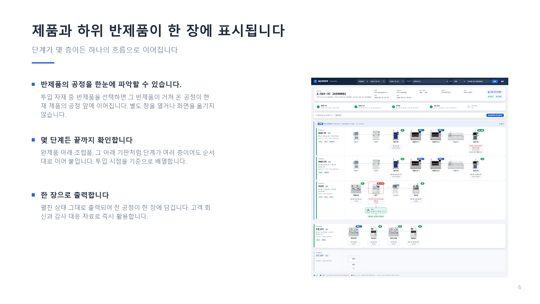
Parent productFinished product queried by the customerKeep the query target
Input relationshipIdentifier of the intermediate product actually usedDistinguish it from other intermediate products with the same item number
Downstream processProduction path of the intermediate productReduce the need to query again in another window
Downstream detailsMaterial, inspection, and repair historyVerify even the evidence supporting the production history

Production Events and Traceability Evidence · Meaning and Judgment

When an intermediate product is selected from the input materials, its process is connected before the current product. The query context is maintained from the finished-product history through the board’s inspection and material details.

Showing past history for the same item number is not the same as linking the intermediate product actually used. The collection procedure determines which identifier is matched and when during assembly.

Implementation validation Confirm with representative finished products that the actual assembly relationships at the site match the intermediate products displayed on screen.

Provided brochure, Chapter 6 · Link finished products to the actual intermediate products used

Provided brochure, Chapter 6 · Link finished products to the actual intermediate products used
Previously Published Demonstration Materials · Implementation Screens and Scope to Be Finalized After Business Review

Production Events and Traceability Evidence · Execution and Validation

The review points for “Parent product” are as follows. Operations and records: Finished product queried by the customer; evaluation and implementation criteria: Keep the query target.

The review points for “Input relationship” are as follows. Operations and records: Identifier of the intermediate product actually used; evaluation and implementation criteria: Distinguish it from other intermediate products with the same item number.

The review points for “Downstream process” are as follows. Operations and records: Production path of the intermediate product; evaluation and implementation criteria: Reduce the need to query again in another window.

CMC TECH · MES · Quality22 / 41
CMCTECH · SOLUTION PROPOSAL

Link finished products to the actual intermediate products used · 2

Criteria for Connecting Production Events and Traceability Evidence

Connection CriteriaItems to Check
ProductCheck Entries and Change History on the Same Basis
Manufacturing NumberCheck Entries and Change History on the Same Basis
ProcessesCheck Entries and Change History on the Same Basis
TimestampCheck Entries and Change History on the Same Basis

Production Events and Traceability Evidence · Meaning and Judgment

The review points for “Downstream details” are as follows. Operations and records: Material, inspection, and repair history; evaluation and implementation criteria: Verify even the evidence supporting the production history.

The production history cannot be reconstructed from the current status alone. Input, replacement, inspection, hold, repair, and reinspection must be recorded as separate events, with the relationships between upstream and downstream semi-finished products and the original product linked together.

For one representative manufacturing number, trace the materials used and inspection results, and conversely compare the range of products affected by a specific material LOT.

Order of On-Site Implementation and Acceptance Testing

  1. Confirm the Roles of Production · Materials · Quality · Customer Response
  2. Compare Product Standards · Source Records
  3. Confirm Exception Handling and Approval Evidence
  4. Validate Results Using a Representative Case

Production Events and Traceability Evidence · Execution and Validation

When reviewing this chapter’s “Link finished products to the actual intermediate products used,” read the product, serial number, process, time, operator, and material LOT according to the same criteria. Personnel responsible for production, materials, quality, and customer response must verify not only the values they enter but also the information received from the preceding step and the status passed to the next step.

Confirm cases involving changes, cancellations, or omissions alongside normal processing results. Record where judgments differ between production, materials, quality, and customer response, and agree on who will approve them and on what basis. Any scope of automation that cannot be verified from existing materials should remain a review item before implementation.

CMC TECH · MES · Quality23 / 41
CMCTECH · SOLUTION PROPOSAL

Review multi-level product relationships as one continuous flow · 1

Comparison with Business Standards

Items to CheckBusiness Process · RecordJudgment · Implementation Criteria
Parent assemblyProcess and status of the current productDistinguish assembly completion from downstream status
Intermediate productProcess of the assembled product usedMaintain the linked production history
Downstream boardBoard inspection, repair, and materialsIdentify events not visible at the parent level
Changed relationshipLinkage handling during replacement and reworkConfirm the scope for implementing and recording additional exceptions

Production Events and Traceability Evidence · Meaning and Judgment

Follow multi-level relationships based on the input time, such as assemblies beneath a finished product and boards beneath an assembly. Expand only to the required depth and move between summaries and details.

The introductory material explains multi-level process linkage but does not define how every replacement and disassembly exception must be implemented. Determine which exceptions to apply according to site rules and validate them separately.

Implementation validation Prepare intermediate-product structures with at least two levels and rework cases to verify that incorrect parent-child links are not created.

Order of On-Site Implementation and Acceptance Testing

  1. Confirm the Roles of Production · Materials · Quality · Customer Response
  2. Compare Product Standards · Source Records
  3. Confirm Exception Handling and Approval Evidence
  4. Validate Results Using a Representative Case

Production Events and Traceability Evidence · Execution and Validation

The review points for “Parent assembly” are as follows. Operations and records: Process and status of the current product; evaluation and implementation criteria: Distinguish assembly completion from downstream status.

The review points for “Intermediate product” are as follows. Operations and records: Process of the assembled product used; evaluation and implementation criteria: Maintain the linked production history.

The review points for “Downstream board” are as follows. Operations and records: Board inspection, repair, and materials; evaluation and implementation criteria: Identify events not visible at the parent level.

CMC TECH · MES · Quality24 / 41
CMCTECH · SOLUTION PROPOSAL

Review multi-level product relationships as one continuous flow · 2

Criteria for Connecting Production Events and Traceability Evidence

Connection CriteriaItems to Check
ProductCheck Entries and Change History on the Same Basis
Manufacturing NumberCheck Entries and Change History on the Same Basis
ProcessesCheck Entries and Change History on the Same Basis
TimestampCheck Entries and Change History on the Same Basis

Production Events and Traceability Evidence · Meaning and Judgment

The review points for “Changed relationship” are as follows. Operations and records: Linkage handling during replacement and rework; evaluation and implementation criteria: Confirm the scope for implementing and recording additional exceptions.

The production history cannot be reconstructed from the current status alone. Input, replacement, inspection, hold, repair, and reinspection must be recorded as separate events, with the relationships between upstream and downstream semi-finished products and the original product linked together.

For one representative manufacturing number, trace the materials used and inspection results, and conversely compare the range of products affected by a specific material LOT.

Order of On-Site Implementation and Acceptance Testing

  1. Confirm the Roles of Production · Materials · Quality · Customer Response
  2. Compare Product Standards · Source Records
  3. Confirm Exception Handling and Approval Evidence
  4. Validate Results Using a Representative Case

Production Events and Traceability Evidence · Execution and Validation

When reviewing this chapter’s “Review multi-level product relationships as one continuous flow,” read the product, serial number, process, time, operator, and material LOT according to the same criteria. Personnel responsible for production, materials, quality, and customer response must verify not only the values they enter but also the information received from the preceding step and the status passed to the next step.

Confirm cases involving changes, cancellations, or omissions alongside normal processing results. Record where judgments differ between production, materials, quality, and customer response, and agree on who will approve them and on what basis. Any scope of automation that cannot be verified from existing materials should remain a review item before implementation.

CMC TECH · MES · Quality25 / 41
CMCTECH · SOLUTION PROPOSAL

Keep defect, repair, and retest events connected · 1

Comparison with Business Standards

Items to CheckBusiness Process · RecordJudgment · Implementation Criteria
DefectTime and details of occurrenceIdentify the equipment where the event began
Cause and corrective actionCause, cause code, and corrective actionVerify the registered repair evidence
Repair executionTime, person responsible, and repair detailsDistinguish planned actions from actions actually taken
RetestReinspection resultDo not infer acceptance from repair notes alone

Production Events and Traceability Evidence · Meaning and Judgment

Review the defect’s time and details, the repair personnel and actions taken, and the retest results in sequence under the relevant equipment. Explain the basis for the current status together with the past events.

Repair completion and inspection acceptance are not the same event. The verification performed after the action must be recorded in order to answer customer questions fully.

Implementation validation Compare the display order and current status across cases of an unresolved defect, an ongoing repair, and a passed retest.

Provided brochure, Chapter 8 · Keep defect, repair, and retest events connected

Provided brochure, Chapter 8 · Keep defect, repair, and retest events connected
Previously Published Demonstration Materials · Implementation Screens and Scope to Be Finalized After Business Review

Production Events and Traceability Evidence · Execution and Validation

The review points for “Defect” are as follows. Operations and records: Time and details of occurrence; evaluation and implementation criteria: Identify the equipment where the event began.

The review points for “Cause and corrective action” are as follows. Operations and records: Cause, cause code, and corrective action; evaluation and implementation criteria: Verify the registered repair evidence.

The review points for “Repair execution” are as follows. Operations and records: Time, person responsible, and repair details; evaluation and implementation criteria: Distinguish planned actions from actions actually taken.

CMC TECH · MES · Quality26 / 41
CMCTECH · SOLUTION PROPOSAL

Keep defect, repair, and retest events connected · 2

Criteria for Connecting Production Events and Traceability Evidence

Connection CriteriaItems to Check
ProductCheck Entries and Change History on the Same Basis
Manufacturing NumberCheck Entries and Change History on the Same Basis
ProcessesCheck Entries and Change History on the Same Basis
TimestampCheck Entries and Change History on the Same Basis

Production Events and Traceability Evidence · Meaning and Judgment

The review items for “Reinspection” are as follows. Work and records: reinspection results; judgment and implementation criteria: do not infer a pass based solely on repair notes.

The production history cannot be reconstructed from the current status alone. Input, replacement, inspection, hold, repair, and reinspection must be recorded as separate events, with the relationships between upstream and downstream semi-finished products and the original product linked together.

For one representative manufacturing number, trace the materials used and inspection results, and conversely compare the range of products affected by a specific material LOT.

Order of On-Site Implementation and Acceptance Testing

  1. Confirm the Roles of Production · Materials · Quality · Customer Response
  2. Compare Product Standards · Source Records
  3. Confirm Exception Handling and Approval Evidence
  4. Validate Results Using a Representative Case

Production Events and Traceability Evidence · Execution and Validation

When reviewing this chapter’s “Do not break the chain of nonconformance, repair, and reinspection events,” read the product, serial number, process, time, operator, and material LOT using the same criteria. Personnel responsible for production, materials, quality, and customer support must verify not only the values they enter but also the information received from the previous step and the status passed to the next step.

Confirm cases involving changes, cancellations, or omissions alongside normal processing results. Record where judgments differ between production, materials, quality, and customer response, and agree on who will approve them and on what basis. Any scope of automation that cannot be verified from existing materials should remain a review item before implementation.

CMC TECH · MES · Quality27 / 41
CMCTECH · SOLUTION PROPOSAL

Do not fill in unregistered records as though they were facts · 1

Comparison with Business Standards

Items to CheckBusiness Process · RecordJudgment · Implementation Criteria
UnregisteredWork records cannot be verifiedAdditional verification with the person in charge and source records
Not collectedPossibly outside the connection or collection scopeVerify the interface and collection procedure
Not applicableA process not applied to the product routeCompare against the registration criteria

Production Events and Traceability Evidence · Meaning and Judgment

The materials explain that details are not provided when no repair record exists. Distinguish between the fact that no record exists and the conclusion that no actual work was performed.

The distinctions in the table are operational verification criteria. Do not claim that all status codes not included in the materials have already been implemented. Agree on the indicators and determination scope required on site.

Implementation verification: Confirm the indicators for products without repair details and processes not yet performed, and check whether users could misunderstand them as a pass or as a missing process.

Comparison with Business Standards

Items to CheckBusiness Process · RecordJudgment · Implementation Criteria
Not yet performedThe relevant process has not yet been reachedCompare with the current stage

Production Events and Traceability Evidence · Execution and Validation

The review items for “Unregistered” are as follows. Work and records: work records cannot be verified; judgment and implementation criteria: additional verification with the person in charge and source records.

The review items for “Not collected” are as follows. Work and records: possibly outside the connection or collection scope; judgment and implementation criteria: verify the interface and collection procedure.

The review items for “Not applicable” are as follows. Work and records: a process not applied to the product route; judgment and implementation criteria: compare against the registration criteria.

CMC TECH · MES · Quality28 / 41
CMCTECH · SOLUTION PROPOSAL

Do not fill in unregistered records as though they were facts · 2

Criteria for Connecting Production Events and Traceability Evidence

Connection CriteriaItems to Check
ProductCheck Entries and Change History on the Same Basis
Manufacturing NumberCheck Entries and Change History on the Same Basis
ProcessesCheck Entries and Change History on the Same Basis
TimestampCheck Entries and Change History on the Same Basis

Production Events and Traceability Evidence · Meaning and Judgment

The review items for “Not yet performed” are as follows. Work and records: the relevant process has not yet been reached; judgment and implementation criteria: compare with the current stage.

The production history cannot be reconstructed from the current status alone. Input, replacement, inspection, hold, repair, and reinspection must be recorded as separate events, with the relationships between upstream and downstream semi-finished products and the original product linked together.

For one representative manufacturing number, trace the materials used and inspection results, and conversely compare the range of products affected by a specific material LOT.

Order of On-Site Implementation and Acceptance Testing

  1. Confirm the Roles of Production · Materials · Quality · Customer Response
  2. Compare Product Standards · Source Records
  3. Confirm Exception Handling and Approval Evidence
  4. Validate Results Using a Representative Case

Production Events and Traceability Evidence · Execution and Validation

When reviewing this chapter’s “Do not fill in unregistered records as though they were facts,” read the product, serial number, process, time, operator, and material LOT using the same criteria. Personnel responsible for production, materials, quality, and customer support must verify not only the values they enter but also the information received from the previous step and the status passed to the next step.

Confirm cases involving changes, cancellations, or omissions alongside normal processing results. Record where judgments differ between production, materials, quality, and customer response, and agree on who will approve them and on what basis. Any scope of automation that cannot be verified from existing materials should remain a review item before implementation.

CMC TECH · MES · Quality29 / 41
CMCTECH · SOLUTION PROPOSAL

Narrow the impact scope of a material issue based on evidence · 1

Comparison with Business Standards

Items to CheckBusiness Process · RecordJudgment · Implementation Criteria
Verify the issue conditionsItem, LOT, and relevant conditionsDo not arbitrarily include all products of the same item
Verify the basis for useActual input location, quantity, and productDistinguish from planned materials
Review the connection scopeRelationship between semi-finished and higher-level productsCheck for connection omissions or collection limitations
Determine quality actionsScope of inventory, inspection, and customer responseThe person in charge reviews the evidence and takes action

Production Events and Traceability Evidence · Meaning and Judgment

Assume that a supplier has notified you of a possible issue with a specific LOT. Verify the processes, equipment, and products where the material was actually used, and also review connections through lower-level semi-finished products.

This scenario is not an actual customer incident. Do not explain that a recall or disposal is automatically confirmed based solely on traceability results. Focus on clarifying the basis for selecting the items subject to investigation.

Implementation verification: Prepare both products that used the same LOT and products that did not, and verify that the scope is distinguished.

Order of On-Site Implementation and Acceptance Testing

  1. Confirm the Roles of Production · Materials · Quality · Customer Response
  2. Compare Product Standards · Source Records
  3. Confirm Exception Handling and Approval Evidence
  4. Validate Results Using a Representative Case

Production Events and Traceability Evidence · Execution and Validation

The review items for “Verify the issue conditions” are as follows. Work and records: item, LOT, and relevant conditions; judgment and implementation criteria: do not arbitrarily include all products of the same item.

The review items for “Verify the basis for use” are as follows. Work and records: actual input location, quantity, and product; judgment and implementation criteria: distinguish from planned materials.

The review items for “Review the connection scope” are as follows. Work and records: relationship between semi-finished and higher-level products; judgment and implementation criteria: check for connection omissions or collection limitations.

CMC TECH · MES · Quality30 / 41
CMCTECH · SOLUTION PROPOSAL

Narrow the impact scope of a material issue based on evidence · 2

Criteria for Connecting Production Events and Traceability Evidence

Connection CriteriaItems to Check
ProductCheck Entries and Change History on the Same Basis
Manufacturing NumberCheck Entries and Change History on the Same Basis
ProcessesCheck Entries and Change History on the Same Basis
TimestampCheck Entries and Change History on the Same Basis

Production Events and Traceability Evidence · Meaning and Judgment

The review items for “Determine quality actions” are as follows. Work and records: scope of inventory, inspection, and customer response; judgment and implementation criteria: the person in charge reviews the evidence and takes action.

The production history cannot be reconstructed from the current status alone. Input, replacement, inspection, hold, repair, and reinspection must be recorded as separate events, with the relationships between upstream and downstream semi-finished products and the original product linked together.

For one representative manufacturing number, trace the materials used and inspection results, and conversely compare the range of products affected by a specific material LOT.

Order of On-Site Implementation and Acceptance Testing

  1. Confirm the Roles of Production · Materials · Quality · Customer Response
  2. Compare Product Standards · Source Records
  3. Confirm Exception Handling and Approval Evidence
  4. Validate Results Using a Representative Case

Production Events and Traceability Evidence · Execution and Validation

When reviewing this chapter’s “Narrow the impact scope of a material issue based on evidence,” read the product, serial number, process, time, operator, and material LOT using the same criteria. Personnel responsible for production, materials, quality, and customer support must verify not only the values they enter but also the information received from the previous step and the status passed to the next step.

Confirm cases involving changes, cancellations, or omissions alongside normal processing results. Record where judgments differ between production, materials, quality, and customer response, and agree on who will approve them and on what basis. Any scope of automation that cannot be verified from existing materials should remain a review item before implementation.

CMC TECH · MES · Quality31 / 41
CMCTECH · SOLUTION PROPOSAL

Consistency between customer responses and output materials · 1

Comparison with Business Standards

Items to CheckBusiness Process · RecordJudgment · Implementation Criteria
Response recipientProduct identification and search criteriaPrevent inclusion of data from other products
Manufacturing historyEquipment, time, operator, and resultsEnable the customer to understand the location and event together
Additional evidenceMaterials, semi-finished products, and repairsExpand only the required scope
Pre-submission verificationDisplay scope, text readability, and unverified itemsReview exposure of personal and sensitive information

Production Events and Traceability Evidence · Meaning and Judgment

Use the product inquiry to output the expanded states for semi-finished products and materials, as well as nonconformance, repair, and reinspection, and include them in the response. Rather than reassembling multiple documents, conduct verification and explanation within the same flow.

The one-page output function does not automatically satisfy every customer requirement or audit criterion. Confirm the submission purpose and required items, and check that the text remains readable even in a long history.

Confirm that the product, event, and status on the implementation verification screen match those in the output, and obtain approval for the scope of external submission.

Order of On-Site Implementation and Acceptance Testing

  1. Confirm the Roles of Production · Materials · Quality · Customer Response
  2. Compare Product Standards · Source Records
  3. Confirm Exception Handling and Approval Evidence
  4. Validate Results Using a Representative Case

Production Events and Traceability Evidence · Execution and Validation

The review items for “Response recipient” are as follows. Work and records: product identification and search criteria; judgment and implementation criteria: prevent inclusion of data from other products.

The review items for “Manufacturing history” are as follows. Work and records: equipment, time, operator, and results; judgment and implementation criteria: enable the customer to understand the location and event together.

The review items for “Additional evidence” are as follows. Work and records: materials, semi-finished products, and repairs; judgment and implementation criteria: expand only the required scope.

CMC TECH · MES · Quality32 / 41
CMCTECH · SOLUTION PROPOSAL

Consistency between customer responses and output materials · 2

Criteria for Connecting Production Events and Traceability Evidence

Connection CriteriaItems to Check
ProductCheck Entries and Change History on the Same Basis
Manufacturing NumberCheck Entries and Change History on the Same Basis
ProcessesCheck Entries and Change History on the Same Basis
TimestampCheck Entries and Change History on the Same Basis

Production Events and Traceability Evidence · Meaning and Judgment

The review items for “Pre-submission verification” are as follows. Work and records: display scope, text readability, and unverified items; judgment and implementation criteria: review exposure of personal and sensitive information.

The production history cannot be reconstructed from the current status alone. Input, replacement, inspection, hold, repair, and reinspection must be recorded as separate events, with the relationships between upstream and downstream semi-finished products and the original product linked together.

For one representative manufacturing number, trace the materials used and inspection results, and conversely compare the range of products affected by a specific material LOT.

Order of On-Site Implementation and Acceptance Testing

  1. Confirm the Roles of Production · Materials · Quality · Customer Response
  2. Compare Product Standards · Source Records
  3. Confirm Exception Handling and Approval Evidence
  4. Validate Results Using a Representative Case

Production Events and Traceability Evidence · Execution and Validation

When reviewing this chapter’s “Consistency between customer responses and output materials,” read the product, serial number, process, time, operator, and material LOT using the same criteria. Personnel responsible for production, materials, quality, and customer support must verify not only the values they enter but also the information received from the previous step and the status passed to the next step.

Confirm cases involving changes, cancellations, or omissions alongside normal processing results. Record where judgments differ between production, materials, quality, and customer response, and agree on who will approve them and on what basis. Any scope of automation that cannot be verified from existing materials should remain a review item before implementation.

CMC TECH · MES · Quality33 / 41
CMCTECH · SOLUTION PROPOSAL

Improve collection gaps revealed in the diagram · 1

Comparison with Business Standards

Items to CheckBusiness Process · RecordJudgment · Implementation Criteria
Verify the locationEquipment with no production recordVerify whether the process is required for the target product
Verify progressCurrent stage and planned routeDistinguish whether it has not yet been performed
Verify collectionEquipment logs and input proceduresCheck for possible non-collection, delays, or omissions
Verify improvementsRe-query after supplementing the connectionCompare source records with displayed results

Production Events and Traceability Evidence · Meaning and Judgment

The list may show only rows with records, but the overall process batch also reveals equipment locations with no production records. This provides an opportunity to identify and improve collection gaps.

Do not conclude that a process was omitted based solely on an empty interval. First verify the actual route and status, then determine whether there is a collection issue.

Implementation verification: Create interface-specific test items that distinguish normal, missing, duplicate, and delayed records.

Order of On-Site Implementation and Acceptance Testing

  1. Confirm the Roles of Production · Materials · Quality · Customer Response
  2. Compare Product Standards · Source Records
  3. Confirm Exception Handling and Approval Evidence
  4. Validate Results Using a Representative Case

Production Events and Traceability Evidence · Execution and Validation

The review items for “Verify the location” are as follows. Work and records: equipment with no production record; judgment and implementation criteria: verify whether the process is required for the target product.

The review items for “Verify progress” are as follows. Work and records: current stage and planned route; judgment and implementation criteria: distinguish whether it has not yet been performed.

The review items for “Verify collection” are as follows. Work and records: equipment logs and input procedures; judgment and implementation criteria: check for possible non-collection, delays, or omissions.

CMC TECH · MES · Quality34 / 41
CMCTECH · SOLUTION PROPOSAL

Improve collection gaps revealed in the diagram · 2

Criteria for Connecting Production Events and Traceability Evidence

Connection CriteriaItems to Check
ProductCheck Entries and Change History on the Same Basis
Manufacturing NumberCheck Entries and Change History on the Same Basis
ProcessesCheck Entries and Change History on the Same Basis
TimestampCheck Entries and Change History on the Same Basis

Production Events and Traceability Evidence · Meaning and Judgment

The review items for “Verify improvements” are as follows. Work and records: re-query after supplementing the connection; judgment and implementation criteria: compare source records with displayed results.

The production history cannot be reconstructed from the current status alone. Input, replacement, inspection, hold, repair, and reinspection must be recorded as separate events, with the relationships between upstream and downstream semi-finished products and the original product linked together.

For one representative manufacturing number, trace the materials used and inspection results, and conversely compare the range of products affected by a specific material LOT.

Order of On-Site Implementation and Acceptance Testing

  1. Confirm the Roles of Production · Materials · Quality · Customer Response
  2. Compare Product Standards · Source Records
  3. Confirm Exception Handling and Approval Evidence
  4. Validate Results Using a Representative Case

Production Events and Traceability Evidence · Execution and Validation

When reviewing this chapter’s “Improve collection gaps revealed in the diagram,” read the product, serial number, process, time, operator, and material LOT using the same criteria. Personnel responsible for production, materials, quality, and customer support must verify not only the values they enter but also the information received from the previous step and the status passed to the next step.

Confirm cases involving changes, cancellations, or omissions alongside normal processing results. Record where judgments differ between production, materials, quality, and customer response, and agree on who will approve them and on what basis. Any scope of automation that cannot be verified from existing materials should remain a review item before implementation.

CMC TECH · MES · Quality35 / 41
CMCTECH · SOLUTION PROPOSAL

Connecting production preparation with actual production records · 1

Comparison with Business Standards

Items to CheckBusiness Process · RecordJudgment · Implementation Criteria
Production PreparationPlanning · material procurement · instruction criteriaEstablishing execution criteria
Shop-floor executionActual inputs · pass-throughs · inspectionsCollecting facts as they occur
Identifying discrepanciesDifferences between the plan and actual usage and progressVerifying the basis for changes and exceptions
History lookupLinking events by productCustomer response and internal verification

Production Events and Traceability Evidence · Meaning and Judgment

A perspective is needed that prepares production and materials through MPS·MRP and connects confirmed instructions to MES production results. The direct scope of this introduction is production traceability, which is distinct from the detailed implementation of planning functions.

When production preparation is unstable, changes increase on the shop floor, and when change records are missing, traceability becomes difficult. We will consider building traceability screens as part of connecting production preparation with actual results.

As part of implementation verification, confirm whether instructed quantities and passed quantities, as well as planned materials and materials actually used, can each be distinguished.

Order of On-Site Implementation and Acceptance Testing

  1. Confirm the Roles of Production · Materials · Quality · Customer Response
  2. Compare Product Standards · Source Records
  3. Confirm Exception Handling and Approval Evidence
  4. Validate Results Using a Representative Case

Production Events and Traceability Evidence · Execution and Validation

The review items for “Production Preparation” are as follows. Work·records: planning · material procurement · instruction criteria; decision·implementation criteria: establishing execution criteria.

The review items for “Shop-floor Execution” are as follows. Work·records: actual inputs · pass-throughs · inspections; decision·implementation criteria: collecting facts as they occur.

The review items for “Identifying Discrepancies” are as follows. Work·records: differences between the plan and actual usage and progress; decision·implementation criteria: verifying the basis for changes and exceptions.

CMC TECH · MES · Quality36 / 41
CMCTECH · SOLUTION PROPOSAL

Connecting production preparation with actual production records · 2

Criteria for Connecting Production Events and Traceability Evidence

Connection CriteriaItems to Check
ProductCheck Entries and Change History on the Same Basis
Manufacturing NumberCheck Entries and Change History on the Same Basis
ProcessesCheck Entries and Change History on the Same Basis
TimestampCheck Entries and Change History on the Same Basis

Production Events and Traceability Evidence · Meaning and Judgment

The review items for “History Lookup” are as follows. Work·records: linking events by product; decision·implementation criteria: customer response and internal verification.

The production history cannot be reconstructed from the current status alone. Input, replacement, inspection, hold, repair, and reinspection must be recorded as separate events, with the relationships between upstream and downstream semi-finished products and the original product linked together.

For one representative manufacturing number, trace the materials used and inspection results, and conversely compare the range of products affected by a specific material LOT.

Order of On-Site Implementation and Acceptance Testing

  1. Confirm the Roles of Production · Materials · Quality · Customer Response
  2. Compare Product Standards · Source Records
  3. Confirm Exception Handling and Approval Evidence
  4. Validate Results Using a Representative Case

Production Events and Traceability Evidence · Execution and Validation

When reviewing this chapter’s “Connecting production preparation with actual production records,” read product, manufacturing number, process, time, operator, and material LOT using the same criteria. Those responsible for production, materials, quality, and customer response must check not only the values they enter, but also the information received from the preceding step and the status to be passed to the next step.

Confirm cases involving changes, cancellations, or omissions alongside normal processing results. Record where judgments differ between production, materials, quality, and customer response, and agree on who will approve them and on what basis. Any scope of automation that cannot be verified from existing materials should remain a review item before implementation.

CMC TECH · MES · Quality37 / 41
CMCTECH · SOLUTION PROPOSAL

Investigating occurrence and escape causes separately · 1

Comparison with Business Standards

WorkCurrent approachCMC EIMS implementation direction
OccurrenceConcluding that it was operator negligenceComparing work, component, and equipment conditions
EscapeInstructing only that inspections be strengthenedReviewing gaps in criteria and detection conditions
CountermeasuresA response from one departmentVerifying occurrence and detection countermeasures separately

Production Events and Traceability Evidence · Meaning and Judgment

We examine both how the issue was created and how it escaped detection during inspection.

When investigating the contact issue in the case, compare the conditions of normal and defective products. Narrow down which components, work activities, and equipment conditions differed. This is an implementation approach that compares MES work records with quality data using the same product as the reference. A large volume of data does not automatically establish the cause.

The production history cannot be reconstructed from the current status alone. Input, replacement, inspection, hold, repair, and reinspection must be recorded as separate events, with the relationships between upstream and downstream semi-finished products and the original product linked together.

Order of On-Site Implementation and Acceptance Testing

  1. Confirm the Roles of Production · Materials · Quality · Customer Response
  2. Compare Product Standards · Source Records
  3. Confirm Exception Handling and Approval Evidence
  4. Validate Results Using a Representative Case

Production Events and Traceability Evidence · Execution and Validation

At the same time, examine why it was not detected during pre-shipment inspection. Confirm whether the inspection item covers the phenomenon, whether the measurement method is appropriate, and whether any specific conditions were omitted. Simply telling inspectors to be more careful does not fill gaps in the criteria. Compare the standard and the actual inspection records together.

Distinguishing occurrence countermeasures from escape countermeasures clarifies what needs to change. The person responsible and the verification method may differ between modifying process conditions and supplementing inspection items. Gathering both countermeasures as evidence for the same customer case helps reduce the risk of completing only one and treating it as a full resolution.

CMC TECH · MES · Quality38 / 41
CMCTECH · SOLUTION PROPOSAL

Investigating occurrence and escape causes separately · 2

Criteria for Connecting Production Events and Traceability Evidence

Connection CriteriaItems to Check
ProductCheck Entries and Change History on the Same Basis
Manufacturing NumberCheck Entries and Change History on the Same Basis
ProcessesCheck Entries and Change History on the Same Basis
TimestampCheck Entries and Change History on the Same Basis

Production Events and Traceability Evidence · Meaning and Judgment

The review items for “Occurrence” are as follows. Current approach: concluding that it was operator negligence; CMC EIMS implementation direction: comparing work, component, and equipment conditions.

The review items for “Escape” are as follows. Current approach: instructing only that inspections be strengthened; CMC EIMS implementation direction: reviewing gaps in criteria and detection conditions.

The review items for “Countermeasures” are as follows. Current approach: a response from one department; CMC EIMS implementation direction: verifying occurrence and detection countermeasures separately.

Order of On-Site Implementation and Acceptance Testing

  1. Confirm the Roles of Production · Materials · Quality · Customer Response
  2. Compare Product Standards · Source Records
  3. Confirm Exception Handling and Approval Evidence
  4. Validate Results Using a Representative Case

Production Events and Traceability Evidence · Execution and Validation

When reviewing this chapter’s “Investigating occurrence and escape causes separately,” read product, manufacturing number, process, time, operator, and material LOT using the same criteria. Those responsible for production, materials, quality, and customer response must check not only the values they enter, but also the information received from the preceding step and the status to be passed to the next step.

Confirm cases involving changes, cancellations, or omissions alongside normal processing results. Record where judgments differ between production, materials, quality, and customer response, and agree on who will approve them and on what basis. Any scope of automation that cannot be verified from existing materials should remain a review item before implementation.

CMC TECH · MES · Quality39 / 41
CMCTECH · SOLUTION PROPOSAL

Comparing incoming, in-process, and pre-shipment inspections for the same defect · 1

CMC QMS Incoming Inspection Status

CMC QMS Incoming Inspection Status
Previously Published Demonstration Materials · Implementation Screens and Scope to Be Finalized After Business Review

Production Events and Traceability Evidence · Meaning and Judgment

The aggregation scope and classification of phenomena come before the shape of the chart.

Review changes at the component stage in the CMC QMS Incoming Inspection Status. If the same type increases during a particular period, check the relevant receipt and supplier conditions. The fact that an abnormality appears in incoming inspection alone does not establish the cause of the customer issue. Compare the scope applied to the product and whether the phenomena match.

The production history cannot be reconstructed from the current status alone. Input, replacement, inspection, hold, repair, and reinspection must be recorded as separate events, with the relationships between upstream and downstream semi-finished products and the original product linked together.

CMC QMS In-Process Inspection Status

CMC QMS In-Process Inspection Status
Previously Published Demonstration Materials · Implementation Screens and Scope to Be Finalized After Business Review

Production Events and Traceability Evidence · Execution and Validation

In the In-Process Inspection Status, confirm changes at the manufacturing stage. If incoming inspection was stable but problems increased at a particular process, examine the work and equipment conditions of that process. Do not mix different defect classifications or periods when comparing them. Departmental charts can be read together only when the same phenomenon is recorded under the same name.

If customer occurrences continue despite few problems in pre-shipment inspection, the detection scope must be reviewed again. This chapter presents the interpretation sequence for the three stages. In the next step, determine which criteria to supplement instead of merely increasing the number of inspections. The actual comparison linkage will be configured by aligning each customer’s data identification system.

CMC TECH · MES · Quality40 / 41
CMCTECH · SOLUTION PROPOSAL

Comparing incoming, in-process, and pre-shipment inspections for the same defect · 2

CMC QMS Pre-Shipment Inspection Status

CMC QMS Pre-Shipment Inspection Status
Previously Published Demonstration Materials · Implementation Screens and Scope to Be Finalized After Business Review

Production Events and Traceability Evidence · Meaning and Judgment

The production history cannot be reconstructed from the current status alone. Input, replacement, inspection, hold, repair, and reinspection must be recorded as separate events, with the relationships between upstream and downstream semi-finished products and the original product linked together.

For one representative manufacturing number, trace the materials used and inspection results, and conversely compare the range of products affected by a specific material LOT.

Order of On-Site Implementation and Acceptance Testing

  1. Confirm the Roles of Production · Materials · Quality · Customer Response
  2. Compare Product Standards · Source Records
  3. Confirm Exception Handling and Approval Evidence
  4. Validate Results Using a Representative Case

Production Events and Traceability Evidence · Execution and Validation

When reviewing this chapter’s “Comparing incoming, in-process, and pre-shipment inspections for the same defect,” read product, manufacturing number, process, time, operator, and material LOT using the same criteria. Those responsible for production, materials, quality, and customer response must check not only the values they enter, but also the information received from the preceding step and the status to be passed to the next step.

Confirm cases involving changes, cancellations, or omissions alongside normal processing results. Record where judgments differ between production, materials, quality, and customer response, and agree on who will approve them and on what basis. Any scope of automation that cannot be verified from existing materials should remain a review item before implementation.