CMCTECH · SOLUTION PROPOSAL

Sales Increased, So Why Did Operating Profit Decline?

Criteria for Connecting Financial Figures with Management Decisions

Connection CriteriaItems to Check
Accounting PeriodCheck Entries and Change History on the Same Basis
AccountCheck Entries and Change History on the Same Basis
DepartmentCheck Entries and Change History on the Same Basis
ProductCheck Entries and Change History on the Same Basis

Financial Figures and Management Decisions · Meaning and Judgment

Even after financial statements are prepared, teams repeatedly realign comparison periods, create Excel files, and investigate causes. Management reporting requires not just a list of numbers, but also comparison conditions, calculation grounds, and additional tasks to verify.

This is a comparison case for January–September 2026 and the same period in 2025 for a hypothetical company. It does not represent actual customer performance or improvement effects. The detailed sales growth rate of 9.78% is shown rounded.

Drill down from summary figures to the ledger or aggregation basis to confirm that the same result can be reproduced, and review AI interpretations separately from the calculation grounds.

Order of On-Site Implementation and Acceptance Testing

  1. Confirm the Roles of Accounting, Costing, Sales, and Management
  2. Reconcile Accounting-Period Criteria and Source Records
  3. Confirm Exception Handling and Approval Evidence
  4. Validate Results Using a Representative Case

Financial Figures and Management Decisions · Execution and Validation

CMC AI FI is a system designed to connect tables and charts with explanations based on existing financial accounting work. Practitioners review figures and supporting grounds, while team leaders and executives define the next questions and tasks to verify.

When reviewing this chapter’s “Sales Increased, So Why Did Operating Profit Decline?,” read accounting periods, accounts, departments, products, customers, and cost allocation criteria using the same standards. Those responsible for accounting, costing, sales, and management must check not only the values they enter, but also the information received from the previous step and the status passed to the next step.

CMC TECH · Accounting · Management1 / 41
CMCTECH · SOLUTION PROPOSAL

Connecting Different Questions Using the Same Criteria · 1

Comparison with Business Standards

UserWhat to Check FirstReview to Connect
Accounting StaffJournal Entries · Supporting Documents · Approvals · ClosingConsistency Between Reported Figures and the General Ledger · Journal Entries
Team LeaderChanges in Costs and PerformanceResponsible Supporting Data and Action Items for Increased Items
ExecutiveCurrent Structure · Multi-Year TrendsGrowth and Profitability, Priorities and Further Investigation

Financial Figures and Management Decisions · Meaning and Judgment

The review items for 「Accounting Staff」 are as follows. What to check first: journal entries · supporting documents · approvals · closing; review to connect: consistency between reported figures and the general ledger · journal entries.

The review items for 「Team Leader」 are as follows. What to check first: changes in costs and performance; review to connect: responsible supporting data and action items for increased items.

The review items for 「Executive」 are as follows. What to check first: current structure · multi-year trends; review to connect: growth and profitability, priorities and further investigation.

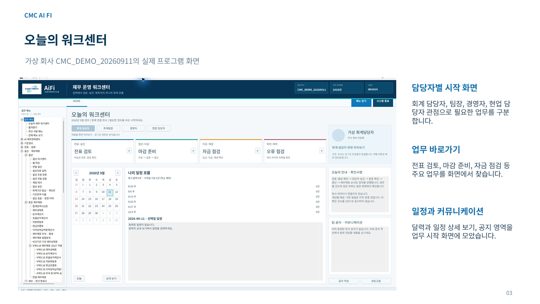
Today's Work Center Demonstration

Today's Work Center Demonstration
Previously Published Demonstration Materials · Implementation Screens and Scope to Be Finalized After Business Review

Financial Figures and Management Decisions · Execution and Validation

When reviewing this chapter's 「Connecting Different Questions Using the Same Criteria」, read the accounting period, account, department, product, business partner, and cost allocation criteria consistently. The people responsible for accounting, costing, sales, and management should check not only the values they enter, but also the information received from the preceding step and the status to be passed to the next step.
Check cases where changes, cancellations, or omissions occur along with normally processed results. Record where judgments differ among accounting, costing, sales, and management, and agree on who will approve them and based on what evidence. Any automation scope that cannot be confirmed using existing materials should remain an item for review before implementation.

CMC TECH · Accounting · Management2 / 41
CMCTECH · SOLUTION PROPOSAL

Connecting Different Questions Using the Same Criteria · 2

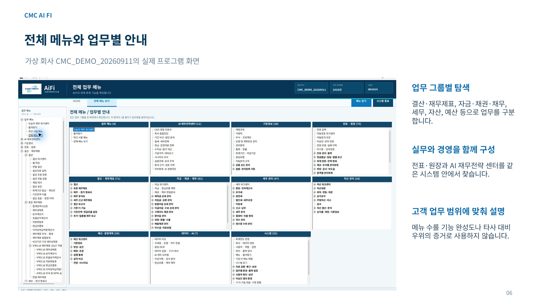
Full Menu Demonstration

Full Menu Demonstration
Previously Published Demonstration Materials · Implementation Screens and Scope to Be Finalized After Business Review

Financial Figures and Management Decisions · Meaning and Judgment

Changes in profit and loss and changes in cash may move differently. Rather than comparing increases and decreases first, align the period, aggregation scope, and closing status, then interpret the effects of unit price, quantity, mix, and cost separately.

Drill down from summary figures to the ledger or aggregation basis to confirm that the same result can be reproduced, and review AI interpretations separately from the calculation grounds.

Order of On-Site Implementation and Acceptance Testing

  1. Confirm the Roles of Accounting, Costing, Sales, and Management
  2. Reconcile Accounting-Period Criteria and Source Records
  3. Confirm Exception Handling and Approval Evidence
  4. Validate Results Using a Representative Case

Financial Figures and Management Decisions · Execution and Validation

When reviewing this chapter's 「Connecting Different Questions Using the Same Criteria」, read the accounting period, account, department, product, business partner, and cost allocation criteria consistently. The people responsible for accounting, costing, sales, and management should check not only the values they enter, but also the information received from the preceding step and the status to be passed to the next step.
Check cases where changes, cancellations, or omissions occur along with normally processed results. Record where judgments differ among accounting, costing, sales, and management, and agree on who will approve them and based on what evidence. Any automation scope that cannot be confirmed using existing materials should remain an item for review before implementation.

CMC TECH · Accounting · Management3 / 41
CMCTECH · SOLUTION PROPOSAL

Accounting Starts with Journal Entries · 1

Comparison with Business Standards

StepWhat to Check in Practice
Verify Supporting DocumentsVerify the transaction date, business partner, amount, and supporting documents.
Enter Journal EntriesAssign the account, debit and credit, department, and management items in accordance with business standards.
Review and ApprovalCheck required items and debit-credit balance, and verify the approval status separately.

Financial Figures and Management Decisions · Meaning and Judgment

Accounting is the process of recording transactions in monetary terms and reporting the company's assets and profit or loss using consistent criteria. A journal entry is the starting point that records when and under which account, business partner, and department a transaction was recorded. AI FI does not omit this fundamental process. The general ledger, financial statements, and management commentary can be trusted only when the supporting documents and entry criteria are correct. The first step is to understand separately the status in which a journal entry has been saved and the status in which it has been reflected after review and approval.

Changes in profit and loss and changes in cash may move differently. Rather than comparing increases and decreases first, align the period, aggregation scope, and closing status, then interpret the effects of unit price, quantity, mix, and cost separately.

Comparison with Business Standards

StepWhat to Check in Practice
Connect to ReportsReconcile reflected transactions with the general ledger, trial balance, and financial statements.

Financial Figures and Management Decisions · Execution and Validation

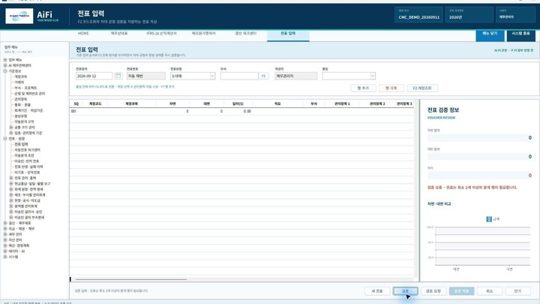
For example, even if an expense has been recorded, an incorrect department can make the company's overall profit and loss appear correct while leading to incorrect departmental judgments. Before reviewing AI commentary, first check the account, department, business partner criteria, and approval status. The screen below is the provided journal-entry input screen; the actual input permissions and approval procedures will be confirmed during implementation.

The review items for 「Verify Supporting Documents」 are as follows. What to check in practice: verify the transaction date, business partner, amount, and supporting documents..

The review items for 「Enter Journal Entries」 are as follows. What to check in practice: assign the account, debit and credit, department, and management items in accordance with business standards..

CMC TECH · Accounting · Management4 / 41
CMCTECH · SOLUTION PROPOSAL

Accounting Starts with Journal Entries · 2

Journal Entry Input: Practical Screen for Checking Accounts, Business Partners, Departments, and Debits and Credits

Journal Entry Input: Practical Screen for Checking Accounts, Business Partners, Departments, and Debits and Credits
Previously Published Demonstration Materials · Implementation Screens and Scope to Be Finalized After Business Review

Financial Figures and Management Decisions · Meaning and Judgment

The review items for 「Review and Approval」 are as follows. What to check in practice: check required items and debit-credit balance, and verify the approval status separately..

The review items for 「Connect to Reports」 are as follows. What to check in practice: reconcile reflected transactions with the general ledger, trial balance, and financial statements..

Changes in profit and loss and changes in cash may move differently. Rather than comparing increases and decreases first, align the period, aggregation scope, and closing status, then interpret the effects of unit price, quantity, mix, and cost separately.

Order of On-Site Implementation and Acceptance Testing

  1. Confirm the Roles of Accounting, Costing, Sales, and Management
  2. Reconcile Accounting-Period Criteria and Source Records
  3. Confirm Exception Handling and Approval Evidence
  4. Validate Results Using a Representative Case

Financial Figures and Management Decisions · Execution and Validation

When reviewing this chapter's 「Accounting Starts with Journal Entries」, read the accounting period, account, department, product, business partner, and cost allocation criteria consistently. The people responsible for accounting, costing, sales, and management should check not only the values they enter, but also the information received from the preceding step and the status to be passed to the next step.
Check cases where changes, cancellations, or omissions occur along with normally processed results. Record where judgments differ among accounting, costing, sales, and management, and agree on who will approve them and based on what evidence. Any automation scope that cannot be confirmed using existing materials should remain an item for review before implementation.

CMC TECH · Accounting · Management5 / 41
CMCTECH · SOLUTION PROPOSAL

Analysis Is Accurate Only When Master Data Is Accurate · 1

Comparison with Business Standards

CriteriaWhat to Align Before Implementation
Accounts · Management ItemsDefine the purpose of each account and the required supplementary information, and verify the mapping to existing codes.
Business Partners · DepartmentsVerify the handling criteria for duplicate codes, department reorganizations, and project attribution.
Banks · CurrenciesVerify account and currency/exchange-rate criteria and the scope for reconciling foreign-currency data.

Financial Figures and Management Decisions · Meaning and Judgment

If the same expense is recorded under different accounts by different people or business partners are duplicated, comparisons and aggregations become unreliable. When implementing AI FI, first verify the criteria for accounts, business partners, departments/projects, banks/accounts, and accounting periods. This is not merely a matter of creating new screens; it also involves carrying forward the meaning of the codes, balances, and management items used in the existing FI system. The person responsible for changes to master data must also be designated.

After organizing the criteria, enter representative transactions and verify that they are aggregated identically in the general ledger and reports. Code consolidation or balance changes must not be executed automatically based solely on an explanation. They require the responsible person's approval and verification, and providing a screen name to an AI consultation does not, by itself, grant access to company data.

Comparison with Business Standards

CriteriaWhat to Align Before Implementation
Accounting PeriodVerify the base year, inquiry period, closing status, and carryforward criteria.

Financial Figures and Management Decisions · Execution and Validation

The review items for 「Accounts · Management Items」 are as follows. What to align before implementation: define the purpose of each account and the required supplementary information, and verify the mapping to existing codes..

The review items for 「Business Partners · Departments」 are as follows. What to align before implementation: verify the handling criteria for duplicate codes, department reorganizations, and project attribution..

The review items for 「Banks · Currencies」 are as follows. What to align before implementation: verify account and currency/exchange-rate criteria and the scope for reconciling foreign-currency data..

CMC TECH · Accounting · Management6 / 41
CMCTECH · SOLUTION PROPOSAL

Analysis Is Accurate Only When Master Data Is Accurate · 2

Criteria for Connecting Financial Figures with Management Decisions

Connection CriteriaItems to Check
Accounting PeriodCheck Entries and Change History on the Same Basis
AccountCheck Entries and Change History on the Same Basis
DepartmentCheck Entries and Change History on the Same Basis
ProductCheck Entries and Change History on the Same Basis

Financial Figures and Management Decisions · Meaning and Judgment

The review items for 「Accounting Period」 are as follows. What to align before implementation: verify the base year, inquiry period, closing status, and carryforward criteria..

Changes in profit and loss and changes in cash may move differently. Rather than comparing increases and decreases first, align the period, aggregation scope, and closing status, then interpret the effects of unit price, quantity, mix, and cost separately.

Drill down from summary figures to the ledger or aggregation basis to confirm that the same result can be reproduced, and review AI interpretations separately from the calculation grounds.

Order of On-Site Implementation and Acceptance Testing

  1. Confirm the Roles of Accounting, Costing, Sales, and Management
  2. Reconcile Accounting-Period Criteria and Source Records
  3. Confirm Exception Handling and Approval Evidence
  4. Validate Results Using a Representative Case

Financial Figures and Management Decisions · Execution and Validation

When reviewing this chapter's 「Analysis Is Accurate Only When Master Data Is Accurate」, read the accounting period, account, department, product, business partner, and cost allocation criteria consistently. The people responsible for accounting, costing, sales, and management should check not only the values they enter, but also the information received from the preceding step and the status to be passed to the next step.
Check cases where changes, cancellations, or omissions occur along with normally processed results. Record where judgments differ among accounting, costing, sales, and management, and agree on who will approve them and based on what evidence. Any automation scope that cannot be confirmed using existing materials should remain an item for review before implementation.

CMC TECH · Accounting · Management7 / 41
CMCTECH · SOLUTION PROPOSAL

Separate Input, Review, and Approval · 1

Comparison with Business Standards

StatusResponsibilitiesBasis for Verification
Input · DraftRecord Based on Supporting DocumentsRequired Items · Debit-Credit Balance · Account
Review · RejectRequest Correction of ErrorsReason for Rejection and Details of Corrections
Approve · ReflectVerification by an Authorized PersonApproval Status and Reflection Result
Failed · UnprocessedCheck the Cause and Review AgainFailure History and Whether Duplicate Reflection Occurred

Financial Figures and Management Decisions · Meaning and Judgment

Entering a journal entry and approving it for accounting purposes are different tasks. The provided menu includes unapproved and rejected journal entries, approval management, reflection and failure history, and resolution document functions. During implementation, it must be determined who works at each status—saving, reviewing, rejecting, approving, and reflecting entries in the general ledger. Even if an automated journal-entry draft is available, it must not be treated as an approved journal entry.

When checking budget performance or financial reports, you must also review the inquiry criteria to determine whether unapproved data is included. Canceling approvals and releasing a closing are control activities different from ordinary inquiries. This proposal explains the items to control and does not guarantee, merely from the presence of menu items, that each approval function has been implemented and validated for every customer.

Order of On-Site Implementation and Acceptance Testing

  1. Confirm the Roles of Accounting, Costing, Sales, and Management
  2. Reconcile Accounting-Period Criteria and Source Records
  3. Confirm Exception Handling and Approval Evidence
  4. Validate Results Using a Representative Case

Financial Figures and Management Decisions · Execution and Validation

The review items for 「Input · Draft」 are as follows. Responsibilities: record based on supporting documents; basis for verification: required items · debit-credit balance · account.

The review items for 「Review · Reject」 are as follows. Responsibilities: request correction of errors; basis for verification: reason for rejection and details of corrections.

The review items for 「Approve · Reflect」 are as follows. Responsibilities: verification by an authorized person; basis for verification: approval status and reflection result.

CMC TECH · Accounting · Management8 / 41
CMCTECH · SOLUTION PROPOSAL

Separate Input, Review, and Approval · 2

Criteria for Connecting Financial Figures with Management Decisions

Connection CriteriaItems to Check
Accounting PeriodCheck Entries and Change History on the Same Basis
AccountCheck Entries and Change History on the Same Basis
DepartmentCheck Entries and Change History on the Same Basis
ProductCheck Entries and Change History on the Same Basis

Financial Figures and Management Decisions · Meaning and Judgment

The review items for 「Failed · Unprocessed」 are as follows. Responsibilities: check the cause and review again; basis for verification: failure history and whether duplicate reflection occurred.

Changes in profit and loss and changes in cash may move differently. Rather than comparing increases and decreases first, align the period, aggregation scope, and closing status, then interpret the effects of unit price, quantity, mix, and cost separately.

Drill down from summary figures to the ledger or aggregation basis to confirm that the same result can be reproduced, and review AI interpretations separately from the calculation grounds.

Order of On-Site Implementation and Acceptance Testing

  1. Confirm the Roles of Accounting, Costing, Sales, and Management
  2. Reconcile Accounting-Period Criteria and Source Records
  3. Confirm Exception Handling and Approval Evidence
  4. Validate Results Using a Representative Case

Financial Figures and Management Decisions · Execution and Validation

When reviewing this chapter's 「Separate Input, Review, and Approval」, read the accounting period, account, department, product, business partner, and cost allocation criteria consistently. The people responsible for accounting, costing, sales, and management should check not only the values they enter, but also the information received from the preceding step and the status to be passed to the next step.
Check cases where changes, cancellations, or omissions occur along with normally processed results. Record where judgments differ among accounting, costing, sales, and management, and agree on who will approve them and based on what evidence. Any automation scope that cannot be confirmed using existing materials should remain an item for review before implementation.

CMC TECH · Accounting · Management9 / 41
CMCTECH · SOLUTION PROPOSAL

Find the Basis for Reported Figures in the General Ledger · 1

Comparison with Business Standards

Reporting PerspectiveData StructureReview Questions
AccountGeneral Ledger · Monthly LedgerWhich transactions increased?
Management ItemsSubledger and balance detailsAre the transactions assigned to the correct customer and department?
CostsCost details by department and monthHas the period or allocation basis changed?
ReconciliationVouchers, trial balance, and financial statementsWere the results retrieved for the same company, period, and status?

Financial Figures and Management Decisions · Meaning and Judgment

Each line in a financial statement is an aggregation of multiple transactions. The general ledger, subledger, and balance details provide the basis for verifying the transactions that make up those amounts. Reviewing departmental selling, general, and administrative expense details or manufacturing cost details together makes it possible to examine cost assignments and comparison ranges more specifically. Rather than stopping at an explanation, include the process of comparing figures with transaction evidence in the implementation validation.

How voucher amendments are reflected in reporting results is confirmed through an actual demonstration. The fact that an amount appears in the ledger does not automatically guarantee that the supporting documentation is appropriate. Confirm the composition of account balances, approval status, and aggregation criteria together, and have the responsible person trace the supporting evidence when differences arise.

Order of On-Site Implementation and Acceptance Testing

  1. Confirm the Roles of Accounting, Costing, Sales, and Management
  2. Reconcile Accounting-Period Criteria and Source Records
  3. Confirm Exception Handling and Approval Evidence
  4. Validate Results Using a Representative Case

Financial Figures and Management Decisions · Execution and Validation

The review items for “Accounts” are as follows. Data composition: General ledger and monthly ledgers; Review question: Which transactions increased?.

The review items for “Management Items” are as follows. Data composition: Subledger and balance details; Review question: Are the transactions assigned to the correct customer and department?.

The review items for “Costs” are as follows. Data composition: Cost details by department and month; Review question: Has the period or allocation basis changed?.

CMC TECH · Accounting · Management10 / 41
CMCTECH · SOLUTION PROPOSAL

Find the basis for reported figures in the ledger · 2

Criteria for Connecting Financial Figures with Management Decisions

Connection CriteriaItems to Check
Accounting PeriodCheck Entries and Change History on the Same Basis
AccountCheck Entries and Change History on the Same Basis
DepartmentCheck Entries and Change History on the Same Basis
ProductCheck Entries and Change History on the Same Basis

Financial Figures and Management Decisions · Meaning and Judgment

The review items for “Reconciliation” are as follows. Data composition: Vouchers, trial balance, and financial statements; Review question: Were the results retrieved for the same company, period, and status?.

Changes in profit and loss and changes in cash may move differently. Rather than comparing increases and decreases first, align the period, aggregation scope, and closing status, then interpret the effects of unit price, quantity, mix, and cost separately.

Drill down from summary figures to the ledger or aggregation basis to confirm that the same result can be reproduced, and review AI interpretations separately from the calculation grounds.

Order of On-Site Implementation and Acceptance Testing

  1. Confirm the Roles of Accounting, Costing, Sales, and Management
  2. Reconcile Accounting-Period Criteria and Source Records
  3. Confirm Exception Handling and Approval Evidence
  4. Validate Results Using a Representative Case

Financial Figures and Management Decisions · Execution and Validation

When reviewing “Find the basis for reported figures in the ledger” in this chapter, read the accounting period, account, department, product, customer, and cost allocation criteria on a consistent basis. Those responsible for accounting, costing, sales, and management must verify not only the values they enter but also the information received from the previous stage and the status passed on to the next stage.

Check cases where changes, cancellations, or omissions occur along with normally processed results. Record where judgments differ among accounting, costing, sales, and management, and agree on who will approve them and based on what evidence. Any automation scope that cannot be confirmed using existing materials should remain an item for review before implementation.

CMC TECH · Accounting · Management11 / 41
CMCTECH · SOLUTION PROPOSAL

Connect monthly closing with year-end closing · 1

Comparison with Business Standards

OrderReview details
Outstanding items checkCheck for unapproved or unprocessed vouchers and missing data.
Adjustments and reconciliationAfter closing adjustments and account reconciliation, verify the amounts between the reports.
Finalization and period controlVerify closing approval and permissions for period locking and reopening.

Financial Figures and Management Decisions · Meaning and Judgment

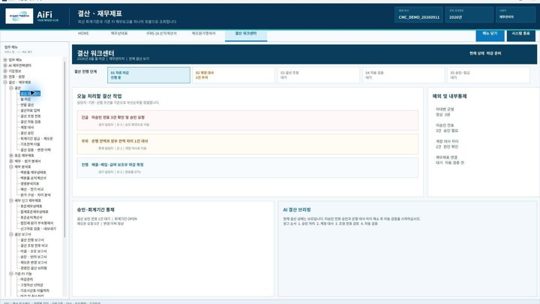
Closing is not simply a matter of pressing the report output button. It is the process of reviewing unprocessed vouchers and adjustment items, reconciling account balances with reported amounts, and then determining the scope of finalization. The provided closing work center illustrates the starting point for these tasks. It is important to distinguish monthly closing, year-end closing, and the carryforward of opening balances, and to define the items each person must verify and the approval boundaries.

Canceling a closing or rerunning a carryforward affects the data and is not an action for AI to execute arbitrarily. Based on the company’s closing procedures, select sample data and verify that the amounts and statuses before and after closing are correct. For year-end closing, also confirm the scope of reconciliation with the existing FI system.

Comparison with Business Standards

OrderReview details
Carryforward and change verificationEstablish the criteria for comparing the carryforward of opening balances with changes made after reopening.

Financial Figures and Management Decisions · Execution and Validation

The review items for “Outstanding Items Check” are as follows. Review details: Check for unapproved or unprocessed vouchers and missing data..

The review items for “Adjustments and Reconciliation” are as follows. Review details: After closing adjustments and account reconciliation, verify the amounts between the reports..

The review items for “Finalization and Period Control” are as follows. Review details: Verify closing approval and permissions for period locking and reopening..

CMC TECH · Accounting · Management12 / 41
CMCTECH · SOLUTION PROPOSAL

Connect monthly closing with year-end closing · 2

Closing work center: A screen that brings together closing targets and verification tasks

Closing work center: A screen that brings together closing targets and verification tasks
Previously Published Demonstration Materials · Implementation Screens and Scope to Be Finalized After Business Review

Financial Figures and Management Decisions · Meaning and Judgment

The review items for “Carryforward and Change Verification” are as follows. Review details: Establish the criteria for comparing the carryforward of opening balances with changes made after reopening..

Changes in profit and loss and changes in cash may move differently. Rather than comparing increases and decreases first, align the period, aggregation scope, and closing status, then interpret the effects of unit price, quantity, mix, and cost separately.

Drill down from summary figures to the ledger or aggregation basis to confirm that the same result can be reproduced, and review AI interpretations separately from the calculation grounds.

Order of On-Site Implementation and Acceptance Testing

  1. Confirm the Roles of Accounting, Costing, Sales, and Management
  2. Reconcile Accounting-Period Criteria and Source Records
  3. Confirm Exception Handling and Approval Evidence
  4. Validate Results Using a Representative Case

Financial Figures and Management Decisions · Execution and Validation

When reviewing “Connect monthly closing with year-end closing” in this chapter, read the accounting period, account, department, product, customer, and cost allocation criteria on a consistent basis. Those responsible for accounting, costing, sales, and management must verify not only the values they enter but also the information received from the previous stage and the status passed on to the next stage.

Check cases where changes, cancellations, or omissions occur along with normally processed results. Record where judgments differ among accounting, costing, sales, and management, and agree on who will approve them and based on what evidence. Any automation scope that cannot be confirmed using existing materials should remain an item for review before implementation.

CMC TECH · Accounting · Management13 / 41
CMCTECH · SOLUTION PROPOSAL

Each financial statement answers a different question · 1

Comparison with Business Standards

ReportReading perspectiveItems to compare
Income statementRevenue and expenses for the periodSame period and aggregation scope
Balance sheetAssets, liabilities, and equity at a point in timeReporting date and balance composition
Cash flow statementCash inflows and outflowsDifference from profit and loss
Statement of changes in equity and notesChanges in equity and supplementary explanationsBasis for transactions, policies, and disclosures

Financial Figures and Management Decisions · Meaning and Judgment

Financial statements do not all present the same information in different formats. The income statement shows performance for a period, while the balance sheet shows assets and obligations at a specific point in time. The cash flow statement, statement of changes in equity, cost details, and notes address different questions and complement one another. The explanations displayed alongside the screen must also distinguish which report is being read and under what conditions.

Comprehensive financial statement analysis is used to review the connections among the individual reports. Distinguish the reporting perspectives so that an increase in profit for the period does not automatically lead to the conclusion that cash has increased. Confirm the actual formats used and the disclosure scope in accordance with the accounting standards applied by the company.

Comparison with Business Standards

ReportReading perspectiveItems to compare
Trial balance and cost detailsAccount aggregation and cost compositionReconciliation of opening balance, changes, and closing balance

Financial Figures and Management Decisions · Execution and Validation

The review items for “Income Statement” are as follows. Reading perspective: Revenue and expenses for the period; Items to compare: Same period and aggregation scope.

The review items for “Balance Sheet” are as follows. Reading perspective: Assets, liabilities, and equity at a point in time; Items to compare: Reporting date and balance composition.

The review items for “Cash Flow Statement” are as follows. Reading perspective: Cash inflows and outflows; Items to compare: Difference from profit and loss.

CMC TECH · Accounting · Management14 / 41
CMCTECH · SOLUTION PROPOSAL

Each financial statement answers a different question · 2

Criteria for Connecting Financial Figures with Management Decisions

Connection CriteriaItems to Check
Accounting PeriodCheck Entries and Change History on the Same Basis
AccountCheck Entries and Change History on the Same Basis
DepartmentCheck Entries and Change History on the Same Basis
ProductCheck Entries and Change History on the Same Basis

Financial Figures and Management Decisions · Meaning and Judgment

The review items for “Statement of Changes in Equity and Notes” are as follows. Reading perspective: Changes in equity and supplementary explanations; Items to compare: Basis for transactions, policies, and disclosures.

The review items for “Trial Balance and Cost Details” are as follows. Reading perspective: Account aggregation and cost composition; Items to compare: Reconciliation of opening balance, changes, and closing balance.

Changes in profit and loss and changes in cash may move differently. Rather than comparing increases and decreases first, align the period, aggregation scope, and closing status, then interpret the effects of unit price, quantity, mix, and cost separately.

Order of On-Site Implementation and Acceptance Testing

  1. Confirm the Roles of Accounting, Costing, Sales, and Management
  2. Reconcile Accounting-Period Criteria and Source Records
  3. Confirm Exception Handling and Approval Evidence
  4. Validate Results Using a Representative Case

Financial Figures and Management Decisions · Execution and Validation

When reviewing “Each financial statement answers a different question” in this chapter, read the accounting period, account, department, product, customer, and cost allocation criteria on a consistent basis. Those responsible for accounting, costing, sales, and management must verify not only the values they enter but also the information received from the previous stage and the status passed on to the next stage.

Check cases where changes, cancellations, or omissions occur along with normally processed results. Record where judgments differ among accounting, costing, sales, and management, and agree on who will approve them and based on what evidence. Any automation scope that cannot be confirmed using existing materials should remain an item for review before implementation.

CMC TECH · Accounting · Management15 / 41
CMCTECH · SOLUTION PROPOSAL

Check comparison conditions before amounts · 1

Comparison with Business Standards

SituationCheck in the programDecision criterion
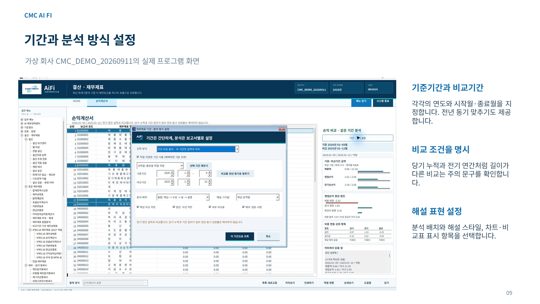
Current period: 9 months · Prior period: 12 monthsSet the period and analysis methodDo not interpret −20.71% as growth for the same period
When comparing with the prior yearAlign both periods to January–SeptemberConfirm that the retrieval conditions match across the table, chart, and commentary
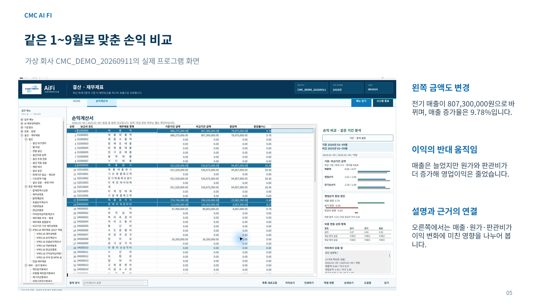
Revenue increase · Profit decreaseChanges in cost of sales and selling, general, and administrative expensesDistinguish calculated contributions from hypotheses about causes

Financial Figures and Management Decisions · Meaning and Judgment

The review items for “Current Period: 9 Months · Prior Period: 12 Months” are as follows. Check in the program: Set the period and analysis method; Decision criterion: Do not interpret −20.71% as growth for the same period.

The review items for “When Comparing with the Prior Year” are as follows. Check in the program: Align both periods to January–September; Decision criterion: Confirm that the retrieval conditions match across the table, chart, and commentary.

The review items for “Revenue Increase · Profit Decrease” are as follows. Check in the program: Changes in cost of sales and selling, general, and administrative expenses; Decision criterion: Distinguish calculated contributions from hypotheses about causes.

Set the period and analysis method

Set the period and analysis method
Previously Published Demonstration Materials · Implementation Screens and Scope to Be Finalized After Business Review

Financial Figures and Management Decisions · Execution and Validation

When reviewing “Check comparison conditions before amounts” in this chapter, read the accounting period, account, department, product, customer, and cost allocation criteria on a consistent basis. Those responsible for accounting, costing, sales, and management must verify not only the values they enter but also the information received from the previous stage and the status passed on to the next stage.

Check cases where changes, cancellations, or omissions occur along with normally processed results. Record where judgments differ among accounting, costing, sales, and management, and agree on who will approve them and based on what evidence. Any automation scope that cannot be confirmed using existing materials should remain an item for review before implementation.

CMC TECH · Accounting · Management16 / 41
CMCTECH · SOLUTION PROPOSAL

Check comparison conditions before amounts · 2

Compare profit and loss for the same period

Compare profit and loss for the same period
Previously Published Demonstration Materials · Implementation Screens and Scope to Be Finalized After Business Review

Financial Figures and Management Decisions · Meaning and Judgment

Changes in profit and loss and changes in cash may move differently. Rather than comparing increases and decreases first, align the period, aggregation scope, and closing status, then interpret the effects of unit price, quantity, mix, and cost separately.

Drill down from summary figures to the ledger or aggregation basis to confirm that the same result can be reproduced, and review AI interpretations separately from the calculation grounds.

Order of On-Site Implementation and Acceptance Testing

  1. Confirm the Roles of Accounting, Costing, Sales, and Management
  2. Reconcile Accounting-Period Criteria and Source Records
  3. Confirm Exception Handling and Approval Evidence
  4. Validate Results Using a Representative Case

Financial Figures and Management Decisions · Execution and Validation

When reviewing “Check comparison conditions before amounts” in this chapter, read the accounting period, account, department, product, customer, and cost allocation criteria on a consistent basis. Those responsible for accounting, costing, sales, and management must verify not only the values they enter but also the information received from the previous stage and the status passed on to the next stage.

Check cases where changes, cancellations, or omissions occur along with normally processed results. Record where judgments differ among accounting, costing, sales, and management, and agree on who will approve them and based on what evidence. Any automation scope that cannot be confirmed using existing materials should remain an item for review before implementation.

CMC TECH · Accounting · Management17 / 41
CMCTECH · SOLUTION PROPOSAL

Separate calculating why it changed from investigating why it changed

Comparison with Business Standards

ItemIncrease · KRWImpact on operating profit · KRW
Revenue78,975,000+78,975,000
Cost of sales94,857,000−94,857,000
Selling and administrative expenses8,687,000−8,687,000
Change in operating profitVirtual demonstration case−24,569,000

Financial Figures and Management Decisions · Meaning and Judgment

The calculation confirms that the increase in costs is greater than the effect of the increase in sales. This table alone does not establish whether the cause is price, volume, product mix, inventory, or allocation conditions. The person in charge must verify the relevant transaction and operational data.

Explanations are divided into “verified facts → comparative/accounting basis → next review.” AI estimates or scenarios are not presented as confirmed causes, actual results, or guaranteed forecasts.

The review item for “Sales” is as follows. Increase · KRW: 78,975,000; Impact on operating profit · KRW: +78,975,000.

Order of On-Site Implementation and Acceptance Testing

  1. Confirm the Roles of Accounting, Costing, Sales, and Management
  2. Reconcile Accounting-Period Criteria and Source Records
  3. Confirm Exception Handling and Approval Evidence
  4. Validate Results Using a Representative Case

Financial Figures and Management Decisions · Execution and Validation

The review item for “Cost of sales” is as follows. Increase · KRW: 94,857,000; Impact on operating profit · KRW: −94,857,000.

The review item for “Selling and administrative expenses” is as follows. Increase · KRW: 8,687,000; Impact on operating profit · KRW: −8,687,000.

The review item for “Change in operating profit” is as follows. Increase · KRW: Virtual demonstration case; Impact on operating profit · KRW: −24,569,000.

CMC TECH · Accounting · Management18 / 41
CMCTECH · SOLUTION PROPOSAL

Balance sheet: Balance and soundness are different · 1

Comparison with Business Standards

ItemQuestions to verify
AssetsHow collectible are the receivables, and what is the composition of inventory?
LiabilitiesWhen are payments and repayments concentrated?
EquityDoes the connection between profit or loss for the period and changes in equity make sense?
ComparisonAre the reporting date, company scope, and account classifications consistent?

Financial Figures and Management Decisions · Meaning and Judgment

The virtual company screen provided shows assets of KRW 1,468,872,440, liabilities of KRW 244,255,440, and equity of KRW 1,224,617,000. Checking whether assets equal total liabilities and equity is fundamental. However, a matching total alone cannot determine whether receivables are collectible, inventory is appropriate, or there is no repayment burden.

AI explanations should use changes in balances as a starting point and present the materials that the person in charge needs to verify. Soundness should not be confirmed, nor the cause of a cash shortage asserted, based solely on the balance sheet. The scope for review should be defined by linking it to receivables, inventory, and funding data.

Balance sheet: Review the balances as of the reporting date together with the explanation

Balance sheet: Review the balances as of the reporting date together with the explanation
Previously Published Demonstration Materials · Implementation Screens and Scope to Be Finalized After Business Review

Financial Figures and Management Decisions · Execution and Validation

The review item for “Assets” is as follows. Question to verify: How collectible are the receivables, and what is the composition of inventory?

The review item for “Liabilities” is as follows. Question to verify: When are payments and repayments concentrated?

The review item for “Equity” is as follows. Question to verify: Does the connection between profit or loss for the period and changes in equity make sense?

CMC TECH · Accounting · Management19 / 41
CMCTECH · SOLUTION PROPOSAL

Balance sheet: Balance and soundness are different · 2

Criteria for Connecting Financial Figures with Management Decisions

Connection CriteriaItems to Check
Accounting PeriodCheck Entries and Change History on the Same Basis
AccountCheck Entries and Change History on the Same Basis
DepartmentCheck Entries and Change History on the Same Basis
ProductCheck Entries and Change History on the Same Basis

Financial Figures and Management Decisions · Meaning and Judgment

The review item for “Comparison” is as follows. Question to verify: Are the reporting date, company scope, and account classifications consistent?

Changes in profit and loss and changes in cash may move differently. Rather than comparing increases and decreases first, align the period, aggregation scope, and closing status, then interpret the effects of unit price, quantity, mix, and cost separately.

Drill down from summary figures to the ledger or aggregation basis to confirm that the same result can be reproduced, and review AI interpretations separately from the calculation grounds.

Order of On-Site Implementation and Acceptance Testing

  1. Confirm the Roles of Accounting, Costing, Sales, and Management
  2. Reconcile Accounting-Period Criteria and Source Records
  3. Confirm Exception Handling and Approval Evidence
  4. Validate Results Using a Representative Case

Financial Figures and Management Decisions · Execution and Validation

When reviewing this chapter, “Balance sheet: Balance and soundness are different,” the accounting period, accounts, departments, products, customers, and cost allocation criteria must be read on a consistent basis. Those responsible for accounting, costing, sales, and management must verify not only the values they enter but also the information received from the previous stage and the status to be passed to the next stage.

Check cases where changes, cancellations, or omissions occur along with normally processed results. Record where judgments differ among accounting, costing, sales, and management, and agree on who will approve them and based on what evidence. Any automation scope that cannot be confirmed using existing materials should remain an item for review before implementation.

CMC TECH · Accounting · Management20 / 41
CMCTECH · SOLUTION PROPOSAL

Distinguishing manufacturing costs from cost of sales · 1

Comparison with Business Standards

Review focusSupporting data
InputsPeriod-by-period composition of materials, labor, and overhead
InventoryChanges in beginning and ending work-in-process and finished-goods inventory
CriteriaAllocation conditions, responsible departments, and aggregation periods
Operational linkageAdditional supporting data such as quantities, unit prices, and product mix

Financial Figures and Management Decisions · Meaning and Judgment

In manufacturing companies, the costs投入 into production and the costs corresponding to sales in the current period may not be the same. Changes in work-in-process and finished-goods inventory, along with allocation conditions, must be reviewed together. The statement of manufacturing costs is a starting point for reviewing cost composition; an increase in cost of sales is not, by itself, grounds to conclude that raw material prices have risen.

Managing MPS and MRP plans in the production preparation stage together with actual purchasing, input, and inventory data on a consistent basis can make cost-related questions more specific. However, this does not mean that automatic integration between AI FI and MPS, MRP, and MES has already been completed in every environment. It is an extension scope to be validated by defining customer-specific data items and reconciliation methods.

Statement of manufacturing costs: Review manufacturing costs and inventory changes separately

Statement of manufacturing costs: Review manufacturing costs and inventory changes separately
Previously Published Demonstration Materials · Implementation Screens and Scope to Be Finalized After Business Review

Financial Figures and Management Decisions · Execution and Validation

The review item for “Inputs” is as follows. Supporting data: Period-by-period composition of materials, labor, and overhead.

The review item for “Inventory” is as follows. Supporting data: Changes in beginning and ending work-in-process and finished-goods inventory.

The review item for “Criteria” is as follows. Supporting data: Allocation conditions, responsible departments, and aggregation periods.

CMC TECH · Accounting · Management21 / 41
CMCTECH · SOLUTION PROPOSAL

Distinguishing manufacturing costs from cost of sales · 2

Criteria for Connecting Financial Figures with Management Decisions

Connection CriteriaItems to Check
Accounting PeriodCheck Entries and Change History on the Same Basis
AccountCheck Entries and Change History on the Same Basis
DepartmentCheck Entries and Change History on the Same Basis
ProductCheck Entries and Change History on the Same Basis

Financial Figures and Management Decisions · Meaning and Judgment

The review item for “Operational linkage” is as follows. Supporting data: Additional supporting data such as quantities, unit prices, and product mix.

Changes in profit and loss and changes in cash may move differently. Rather than comparing increases and decreases first, align the period, aggregation scope, and closing status, then interpret the effects of unit price, quantity, mix, and cost separately.

Drill down from summary figures to the ledger or aggregation basis to confirm that the same result can be reproduced, and review AI interpretations separately from the calculation grounds.

Order of On-Site Implementation and Acceptance Testing

  1. Confirm the Roles of Accounting, Costing, Sales, and Management
  2. Reconcile Accounting-Period Criteria and Source Records
  3. Confirm Exception Handling and Approval Evidence
  4. Validate Results Using a Representative Case

Financial Figures and Management Decisions · Execution and Validation

When reviewing this chapter, “Distinguishing manufacturing costs from cost of sales,” the accounting period, accounts, departments, products, customers, and cost allocation criteria must be read on a consistent basis. Those responsible for accounting, costing, sales, and management must verify not only the values they enter but also the information received from the previous stage and the status to be passed to the next stage.

Check cases where changes, cancellations, or omissions occur along with normally processed results. Record where judgments differ among accounting, costing, sales, and management, and agree on who will approve them and based on what evidence. Any automation scope that cannot be confirmed using existing materials should remain an item for review before implementation.

CMC TECH · Accounting · Management22 / 41
CMCTECH · SOLUTION PROPOSAL

You may have insufficient cash despite having a profit · 1

Comparison with Business Standards

QuestionNext check
Why is funding insufficient even though we made sales?Receivables collection timing and outstanding balances
Why has inventory increased?Timing differences between planning, purchasing, production, and sales
When will the payment burden increase?Maturities and payment schedules for payables and borrowings
Which action should be reviewed first?Person responsible, supporting basis, and feasibility of execution

Financial Figures and Management Decisions · Meaning and Judgment

The time when sales are recorded and the time when payment is actually received may differ. If funds are tied up in inventory or payments, repayments, and investments are concentrated, profit and cash flow may move differently. The cash and working capital strategy screen links these differences to questions for review. To establish the cause, the scope of the receivables, inventory, payables, and funding data must align.

Rather than issuing blanket instructions to accelerate collections or reduce inventory, actual transaction terms and production requirements must be verified. The explanations on the screen are materials to support review, not guarantees of collection or cash forecasts. It is also important to record insufficient data and assumptions in the report.

Cash and working capital strategy: Link to questions that identify differences between cash and profit or loss

Cash and working capital strategy: Link to questions that identify differences between cash and profit or loss
Previously Published Demonstration Materials · Implementation Screens and Scope to Be Finalized After Business Review

Financial Figures and Management Decisions · Execution and Validation

The review items for “Why is funding insufficient even though we made sales?” are as follows. Next check: Receivables collection timing and outstanding balances.

The review items for “Why has inventory increased?” are as follows. Next check: Timing differences between planning, purchasing, production, and sales.

The review items for “When will the payment burden increase?” are as follows. Next check: Maturities and payment schedules for payables and borrowings.

CMC TECH · Accounting · Management23 / 41
CMCTECH · SOLUTION PROPOSAL

You may have insufficient cash despite having a profit · 2

Criteria for Connecting Financial Figures with Management Decisions

Connection CriteriaItems to Check
Accounting PeriodCheck Entries and Change History on the Same Basis
AccountCheck Entries and Change History on the Same Basis
DepartmentCheck Entries and Change History on the Same Basis
ProductCheck Entries and Change History on the Same Basis

Financial Figures and Management Decisions · Meaning and Judgment

The review items for “Which action should be reviewed first?” are as follows. Next check: Person responsible, supporting basis, and feasibility of execution.

Changes in profit and loss and changes in cash may move differently. Rather than comparing increases and decreases first, align the period, aggregation scope, and closing status, then interpret the effects of unit price, quantity, mix, and cost separately.

Drill down from summary figures to the ledger or aggregation basis to confirm that the same result can be reproduced, and review AI interpretations separately from the calculation grounds.

Order of On-Site Implementation and Acceptance Testing

  1. Confirm the Roles of Accounting, Costing, Sales, and Management
  2. Reconcile Accounting-Period Criteria and Source Records
  3. Confirm Exception Handling and Approval Evidence
  4. Validate Results Using a Representative Case

Financial Figures and Management Decisions · Execution and Validation

When reviewing this chapter, “You may have insufficient cash despite having a profit,” the accounting period, accounts, departments, products, customers, and cost allocation criteria must be read on a consistent basis. Those responsible for accounting, costing, sales, and management must verify not only the values they enter but also the information received from the previous stage and the status to be passed to the next stage.

Check cases where changes, cancellations, or omissions occur along with normally processed results. Record where judgments differ among accounting, costing, sales, and management, and agree on who will approve them and based on what evidence. Any automation scope that cannot be confirmed using existing materials should remain an item for review before implementation.

CMC TECH · Accounting · Management24 / 41
CMCTECH · SOLUTION PROPOSAL

Review the current cost structure together with the direction of growth over several years

Current CEO status

Current CEO status
Previously Published Demonstration Materials · Implementation Screens and Scope to Be Finalized After Business Review

Financial Figures and Management Decisions · Meaning and Judgment

Profit and cash are different. Additional data on receivables collection, inventory, payments, and investments must be verified. For manufacturing companies, it is important to align the bases for production and materials planning with those for inventory and costs. The actual data integration scope for MPS, MRP, and MES is a customer-specific design and validation matter.

Changes in profit and loss and changes in cash may move differently. Rather than comparing increases and decreases first, align the period, aggregation scope, and closing status, then interpret the effects of unit price, quantity, mix, and cost separately.

CEO multi-year trend

CEO multi-year trend
Previously Published Demonstration Materials · Implementation Screens and Scope to Be Finalized After Business Review

Financial Figures and Management Decisions · Execution and Validation

When reviewing this chapter, “Review the current cost structure together with the direction of growth over several years,” the accounting period, accounts, departments, products, customers, and cost allocation criteria must be read on a consistent basis. Those responsible for accounting, costing, sales, and management must verify not only the values they enter but also the information received from the previous stage and the status to be passed to the next stage.

Check cases where changes, cancellations, or omissions occur along with normally processed results. Record where judgments differ among accounting, costing, sales, and management, and agree on who will approve them and based on what evidence. Any automation scope that cannot be confirmed using existing materials should remain an item for review before implementation.

CMC TECH · Accounting · Management25 / 41
CMCTECH · SOLUTION PROPOSAL

Set priorities in the comprehensive diagnosis · 1

Comparison with Business Standards

Review flowReview by the person in charge
Read the statusVerify the selected company, period, and key indicators
Distinguish changesCompare the directions of growth, profitability, and financial condition
PrioritiesSelect high-impact items and additional data
Follow-up reviewAssign the person responsible and specify the supporting basis and deadline

Financial Figures and Management Decisions · Meaning and Judgment

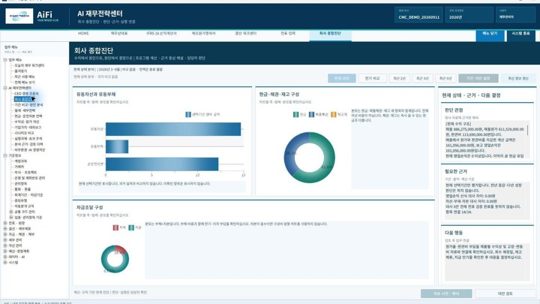
Management cannot review every account in the same depth. The comprehensive company diagnosis examines profit or loss and financial condition together and helps select the topics that require closer review now. When sales growth, weakening profitability, and cash pressure occur simultaneously, it is difficult to reach a conclusion based on a single figure. The facts confirmed by the current data must be separated from areas where data is still insufficient.

A comprehensive diagnosis is not a tool that determines a company’s value with a single score. The person in charge makes the assessment after supplementing the actual sales, purchasing, and production data. The key to the introduction demonstration is verifying that the comparison conditions in the tables and explanations are consistent and that cause hypotheses are not expressed as if they were calculated facts.

Comprehensive company diagnosis: Combine multiple perspectives to identify priorities for follow-up review

Comprehensive company diagnosis: Combine multiple perspectives to identify priorities for follow-up review
Previously Published Demonstration Materials · Implementation Screens and Scope to Be Finalized After Business Review

Financial Figures and Management Decisions · Execution and Validation

The review item for “Read the status” is as follows. Review by the person in charge: Verify the selected company, period, and key indicators.

The review item for “Distinguish changes” is as follows. Review by the person in charge: Compare the directions of growth, profitability, and financial condition.

The review item for “Priorities” is as follows. Review by the person in charge: Select high-impact items and additional data.

CMC TECH · Accounting · Management26 / 41
CMCTECH · SOLUTION PROPOSAL

Set priorities in the comprehensive diagnosis · 2

Criteria for Connecting Financial Figures with Management Decisions

Connection CriteriaItems to Check
Accounting PeriodCheck Entries and Change History on the Same Basis
AccountCheck Entries and Change History on the Same Basis
DepartmentCheck Entries and Change History on the Same Basis
ProductCheck Entries and Change History on the Same Basis

Financial Figures and Management Decisions · Meaning and Judgment

The review items for “Follow-up Review” are as follows. Person in charge confirmation: designate the person in charge, the basis for confirmation, and the deadline.

Changes in profit and loss and changes in cash may move differently. Rather than comparing increases and decreases first, align the period, aggregation scope, and closing status, then interpret the effects of unit price, quantity, mix, and cost separately.

Drill down from summary figures to the ledger or aggregation basis to confirm that the same result can be reproduced, and review AI interpretations separately from the calculation grounds.

Order of On-Site Implementation and Acceptance Testing

  1. Confirm the Roles of Accounting, Costing, Sales, and Management
  2. Reconcile Accounting-Period Criteria and Source Records
  3. Confirm Exception Handling and Approval Evidence
  4. Validate Results Using a Representative Case

Financial Figures and Management Decisions · Execution and Validation

When reviewing this chapter’s “Set Priorities in the Comprehensive Diagnosis,” read the accounting period, account, department, product, customer/supplier, and cost allocation criteria on a consistent basis. Those responsible for accounting, costing, sales, and management should verify not only the values they enter but also the information received from the previous step and the status to be passed to the next step.

Check cases where changes, cancellations, or omissions occur along with normally processed results. Record where judgments differ among accounting, costing, sales, and management, and agree on who will approve them and based on what evidence. Any automation scope that cannot be confirmed using existing materials should remain an item for review before implementation.

CMC TECH · Accounting · Management27 / 41
CMCTECH · SOLUTION PROPOSAL

Profitability improvement starts with identifying the cause · 1

Comparison with Business Standards

ChangeMaterials to investigate
Increase in salesQuantity · selling price · product mix
Increase in cost of salesPurchase price · input quantity · inventory · allocation criteria
Increase in SG&A expensesDetails by account · one-time expenses · period differences
Select actionsPerson in charge confirmation · implementation cost · scope of impact

Financial Figures and Management Decisions · Meaning and Judgment

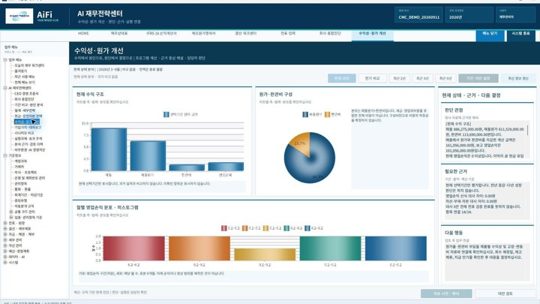
Even if sales increase, operating profit decreases when the cost of sales and selling, general, and administrative expenses increase more rapidly. However, reducing all costs by the same percentage is not the answer. You need to distinguish between spending required for growth, inefficiencies, and the effects of product mix, unit price, and quantity. The profitability and cost improvement screen is used to link calculated changes in profit to review tasks.

Do not have AI create and explain detailed causes that are not present in the source materials. Claims that costs have been reduced must also be checked against the actual period and the criteria used to measure the effect. We propose distinguishing the calculated results in the profit change table from operational causes and proceeding by implementing verified actions first.

Profitability and cost improvement: linking calculations with cause review

Profitability and cost improvement: linking calculations with cause review
Previously Published Demonstration Materials · Implementation Screens and Scope to Be Finalized After Business Review

Financial Figures and Management Decisions · Execution and Validation

The review items for “Increase in sales” are as follows. Materials to investigate: quantity · selling price · product mix.

The review items for “Increase in cost of sales” are as follows. Materials to investigate: purchase price · input quantity · inventory · allocation criteria.

The review items for “Increase in SG&A expenses” are as follows. Materials to investigate: details by account · one-time expenses · period differences.

CMC TECH · Accounting · Management28 / 41
CMCTECH · SOLUTION PROPOSAL

Profitability improvement starts with identifying the cause · 2

Criteria for Connecting Financial Figures with Management Decisions

Connection CriteriaItems to Check
Accounting PeriodCheck Entries and Change History on the Same Basis
AccountCheck Entries and Change History on the Same Basis
DepartmentCheck Entries and Change History on the Same Basis
ProductCheck Entries and Change History on the Same Basis

Financial Figures and Management Decisions · Meaning and Judgment

The review items for “Select actions” are as follows. Materials to investigate: person in charge confirmation · implementation cost · scope of impact.

Changes in profit and loss and changes in cash may move differently. Rather than comparing increases and decreases first, align the period, aggregation scope, and closing status, then interpret the effects of unit price, quantity, mix, and cost separately.

Drill down from summary figures to the ledger or aggregation basis to confirm that the same result can be reproduced, and review AI interpretations separately from the calculation grounds.

Order of On-Site Implementation and Acceptance Testing

  1. Confirm the Roles of Accounting, Costing, Sales, and Management
  2. Reconcile Accounting-Period Criteria and Source Records
  3. Confirm Exception Handling and Approval Evidence
  4. Validate Results Using a Representative Case

Financial Figures and Management Decisions · Execution and Validation

When reviewing this chapter’s “Profitability improvement starts with identifying the cause,” read the accounting period, account, department, product, customer/supplier, and cost allocation criteria on a consistent basis. Those responsible for accounting, costing, sales, and management should verify not only the values they enter but also the information received from the previous step and the status to be passed to the next step.

Check cases where changes, cancellations, or omissions occur along with normally processed results. Record where judgments differ among accounting, costing, sales, and management, and agree on who will approve them and based on what evidence. Any automation scope that cannot be confirmed using existing materials should remain an item for review before implementation.

CMC TECH · Accounting · Management29 / 41
CMCTECH · SOLUTION PROPOSAL

Scenarios compare assumptions; they are not forecasts

Comparison with Business Standards

ItemAssumptions · calculations
Input conditionsSales · cost of sales · SG&A expenses: -2% each
Baseline operating profit161,056,000 won
Scenario operating profit157,834,880 won
Difference-3,221,120 won

Financial Figures and Management Decisions · Meaning and Judgment

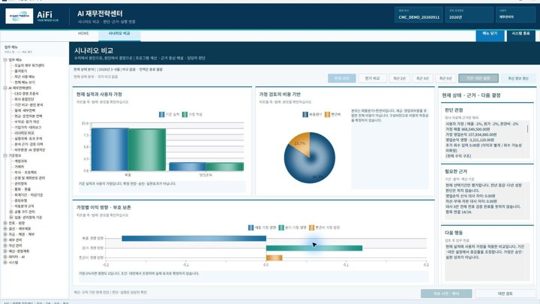
The hypothetical demonstration compares a scenario in which sales, cost of sales, and selling, general, and administrative expenses are each reduced by 2%. Operating profit decreases from 161,056,000 won to 157,834,880 won, a reduction of 3,221,120 won. Although costs also decrease, sales decrease under the same assumption, so this does not mean that profit improves. Interpret the result only after first identifying what was changed.

This is a hypothetical calculation based on the provided materials, not a confirmed outlook or actual customer performance. When changing assumptions, document the supporting rationale and comparison target, and have the person in charge verify feasibility. Even when used for planning, additional review is needed for interrelated conditions such as sales volume, price, and inventory.

Scenario comparison: review the changed assumptions and the difference in results together

Scenario comparison: review the changed assumptions and the difference in results together
Previously Published Demonstration Materials · Implementation Screens and Scope to Be Finalized After Business Review

Financial Figures and Management Decisions · Execution and Validation

The review items for “Input conditions” are as follows. Assumptions · calculations: sales · cost of sales · SG&A expenses: -2% each.

The review items for “Baseline operating profit” are as follows. Assumptions · calculations: 161,056,000 won.

The review items for “Scenario operating profit” are as follows. Assumptions · calculations: 157,834,880 won.

The review items for “Difference” are as follows. Assumptions · calculations: -3,221,120 won.

CMC TECH · Accounting · Management30 / 41
CMCTECH · SOLUTION PROPOSAL

Distinguish between the roles of AI explanations and AI consultation · 1

Comparison with Business Standards

CategoryScope of explanation
Program explanationEvidence-based explanations according to query conditions, amounts, and rules
AI ConsultationGuidance on registered menus and screens, and confirmation questions
In-depth generative analysisAdditional integrations requiring data scope, security, and validation
Final judgmentConfirmation by the user and accounting personnel or experts

Financial Figures and Management Decisions · Meaning and Judgment

The explanation beside the financial statements and the AI consultation on the website do not perform the same function. The current explanation based on the provided materials focuses on calculation- and rule-based explanations. Consultation provides usage guidance with reference to the screen identification information provided and registered explanatory materials. If the actual screen or accounting data has not been provided, it must not respond as though it has seen the company’s current amounts or errors.

Hannah, David, and Esther can explain the same product materials according to their respective roles. The 21 registered detailed guides and the list of 425 screens do not cover the same scope. They do not claim to have learned detailed manuals that have not yet been provided, and they do not state as fact any unverified buttons, keyboard shortcuts, or revision procedures.

Order of On-Site Implementation and Acceptance Testing

  1. Confirm the Roles of Accounting, Costing, Sales, and Management
  2. Reconcile Accounting-Period Criteria and Source Records
  3. Confirm Exception Handling and Approval Evidence
  4. Validate Results Using a Representative Case

Financial Figures and Management Decisions · Execution and Validation

The review items for “Program explanation” are as follows. Scope of explanation: evidence-based explanations according to query conditions, amounts, and rules.

The review items for “AI consultation” are as follows. Scope of explanation: guidance on registered menus and screens, and confirmation questions.

The review items for “In-depth generative analysis” are as follows. Scope of explanation: additional integrations requiring data scope, security, and validation.

CMC TECH · Accounting · Management31 / 41
CMCTECH · SOLUTION PROPOSAL

Distinguish between the roles of AI explanations and AI consultation · 2

Criteria for Connecting Financial Figures with Management Decisions

Connection CriteriaItems to Check
Accounting PeriodCheck Entries and Change History on the Same Basis
AccountCheck Entries and Change History on the Same Basis
DepartmentCheck Entries and Change History on the Same Basis
ProductCheck Entries and Change History on the Same Basis

Financial Figures and Management Decisions · Meaning and Judgment

The review items for “Final judgment” are as follows. Scope of explanation: confirmation by the user and accounting personnel or experts.

Changes in profit and loss and changes in cash may move differently. Rather than comparing increases and decreases first, align the period, aggregation scope, and closing status, then interpret the effects of unit price, quantity, mix, and cost separately.

Drill down from summary figures to the ledger or aggregation basis to confirm that the same result can be reproduced, and review AI interpretations separately from the calculation grounds.

Order of On-Site Implementation and Acceptance Testing

  1. Confirm the Roles of Accounting, Costing, Sales, and Management
  2. Reconcile Accounting-Period Criteria and Source Records
  3. Confirm Exception Handling and Approval Evidence
  4. Validate Results Using a Representative Case

Financial Figures and Management Decisions · Execution and Validation

When reviewing this chapter’s “Distinguish between the roles of AI explanations and AI consultation,” read the accounting period, account, department, product, customer/supplier, and cost allocation criteria on a consistent basis. Those responsible for accounting, costing, sales, and management should verify not only the values they enter but also the information received from the previous step and the status to be passed to the next step.

Check cases where changes, cancellations, or omissions occur along with normally processed results. Record where judgments differ among accounting, costing, sales, and management, and agree on who will approve them and based on what evidence. Any automation scope that cannot be confirmed using existing materials should remain an item for review before implementation.

CMC TECH · Accounting · Management32 / 41
CMCTECH · SOLUTION PROPOSAL

Member login and accounting permissions are different · 1

Comparison with Business Standards

ItemGuiding principles
Context transmissionTransmit the product and screen identifiers and the user’s question
Information protectionDo not include amounts, personal information, or authentication information in URLs
Screen guidanceRequest confirmation of the current screen status when there is no registered basis for it

Financial Figures and Management Decisions · Meaning and Judgment

Even when AI consultation is opened from the program, website membership does not substitute for permission to view or modify accounting data. Access permissions by company, user, and role must be verified in the actual business system. The product name and screen identifier transmitted to the consultation are information for explaining the context, not authentication credentials.

At implementation, define the boundary between materials to be disclosed in consultation and actual accounting data. If only the screen name has been provided, give general usage guidance; actual amount analysis requires a separately authorized scope and supporting materials. Data copying, restoration, and cancellation of period closing are not treated as automatic actions in general consultation.

Comparison with Business Standards

ItemGuiding principles
Critical tasksDo not execute approvals, period closing, data restoration, or similar actions without confirmation from the person in charge

Financial Figures and Management Decisions · Execution and Validation

The review items for “Context transmission” are as follows. Guiding principles: transmit the product and screen identifiers and the user’s question.

The review items for “Information protection” are as follows. Guiding principles: do not include amounts, personal information, or authentication information in URLs.

The review items for “Screen guidance” are as follows. Guiding principles: request confirmation of the current screen status when there is no registered basis for it.

CMC TECH · Accounting · Management33 / 41
CMCTECH · SOLUTION PROPOSAL

Member login and accounting permissions are different · 2

Criteria for Connecting Financial Figures with Management Decisions

Connection CriteriaItems to Check
Accounting PeriodCheck Entries and Change History on the Same Basis
AccountCheck Entries and Change History on the Same Basis
DepartmentCheck Entries and Change History on the Same Basis
ProductCheck Entries and Change History on the Same Basis

Financial Figures and Management Decisions · Meaning and Judgment

The review items for “Critical tasks” are as follows. Guiding principles: do not execute approvals, period closing, data restoration, or similar actions without confirmation from the person in charge.

Changes in profit and loss and changes in cash may move differently. Rather than comparing increases and decreases first, align the period, aggregation scope, and closing status, then interpret the effects of unit price, quantity, mix, and cost separately.

Drill down from summary figures to the ledger or aggregation basis to confirm that the same result can be reproduced, and review AI interpretations separately from the calculation grounds.

Order of On-Site Implementation and Acceptance Testing

  1. Confirm the Roles of Accounting, Costing, Sales, and Management
  2. Reconcile Accounting-Period Criteria and Source Records
  3. Confirm Exception Handling and Approval Evidence
  4. Validate Results Using a Representative Case

Financial Figures and Management Decisions · Execution and Validation

When reviewing this chapter’s “Member login and accounting permissions are different,” read the accounting period, account, department, product, customer/supplier, and cost allocation criteria on a consistent basis. Those responsible for accounting, costing, sales, and management should verify not only the values they enter but also the information received from the previous step and the status to be passed to the next step.

Check cases where changes, cancellations, or omissions occur along with normally processed results. Record where judgments differ among accounting, costing, sales, and management, and agree on who will approve them and based on what evidence. Any automation scope that cannot be confirmed using existing materials should remain an item for review before implementation.

CMC TECH · Accounting · Management34 / 41
CMCTECH · SOLUTION PROPOSAL

Validate continuity with the existing FI system · 1

Comparison with Business Standards

Validation areasAgreed criteria
Master dataCode mapping · duplicates · change handling
Financial reconciliationOpening balances · changes during the period · closing balances and key reports
Business processesResponsibilities and results for entry · review · approval · closing
Operational readinessPermissions · training · error verification · post-transition support

Financial Figures and Management Decisions · Meaning and Judgment

Even when new screens and AI features are introduced, the existing accounting data and business processes must remain connected. Verify the mapping of accounts, customers/suppliers, and departments; opening balances and period-specific amounts; and approval and closing statuses, then perform representative tasks in practice. Existing FI menu mapping is a starting point for review; do not conclude that functions and results are the same merely because the screen names are identical.

Document the implementation scope by distinguishing functions verified with actual materials from items requiring separate development. Since competing products also offer analytical and AI functions, do not state definitively that a function is available only with a specific product. We propose validating CMC AI FI by focusing on how consistently it connects your existing business processes with financial reporting.

Order of On-Site Implementation and Acceptance Testing

  1. Confirm the Roles of Accounting, Costing, Sales, and Management
  2. Reconcile Accounting-Period Criteria and Source Records
  3. Confirm Exception Handling and Approval Evidence
  4. Validate Results Using a Representative Case

Financial Figures and Management Decisions · Execution and Validation

The review items for “Master data” are as follows. Agreed criteria: code mapping · duplicates · change handling.

The review items for “Financial reconciliation” are as follows. Agreed criteria: opening balances · changes during the period · closing balances and key reports.

The review items for “Workflow” are as follows. Criteria to agree on: responsibilities and outcomes for input, review, approval, and closing.

CMC TECH · Accounting · Management35 / 41
CMCTECH · SOLUTION PROPOSAL

Verifying continuity with the existing FI · 2

Criteria for Connecting Financial Figures with Management Decisions

Connection CriteriaItems to Check
Accounting PeriodCheck Entries and Change History on the Same Basis
AccountCheck Entries and Change History on the Same Basis
DepartmentCheck Entries and Change History on the Same Basis
ProductCheck Entries and Change History on the Same Basis

Financial Figures and Management Decisions · Meaning and Judgment

The review items for “Operational Readiness” are as follows. Criteria to agree on: permissions, training, error checks, and post-transition support.

Changes in profit and loss and changes in cash may move differently. Rather than comparing increases and decreases first, align the period, aggregation scope, and closing status, then interpret the effects of unit price, quantity, mix, and cost separately.

Drill down from summary figures to the ledger or aggregation basis to confirm that the same result can be reproduced, and review AI interpretations separately from the calculation grounds.

Order of On-Site Implementation and Acceptance Testing

  1. Confirm the Roles of Accounting, Costing, Sales, and Management
  2. Reconcile Accounting-Period Criteria and Source Records
  3. Confirm Exception Handling and Approval Evidence
  4. Validate Results Using a Representative Case

Financial Figures and Management Decisions · Execution and Validation

When reviewing “Verifying continuity with the existing FI” in this chapter, accounting periods, accounts, departments, products, business partners, and cost allocation criteria must be interpreted using the same standards. The people responsible for accounting, costing, sales, and management review not only the values they enter, but also the information received from the preceding step and the status to be passed to the next step.
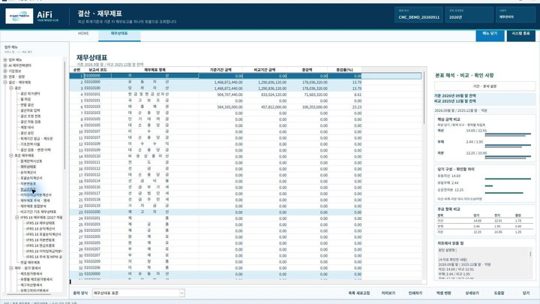
Check cases where changes, cancellations, or omissions occur along with normally processed results. Record where judgments differ among accounting, costing, sales, and management, and agree on who will approve them and based on what evidence. Any automation scope that cannot be confirmed using existing materials should remain an item for review before implementation.

CMC TECH · Accounting · Management36 / 41
CMCTECH · SOLUTION PROPOSAL

A demonstration that verifies using your company’s data, rather than simply explaining what is possible

Comparison with Business Standards

CategoryScope of the explanation in this material
Actual demonstration materialsWork centers · period settings · financial statement comparisons · CEO screens · calculation- and rule-based explanations
Separate review and expansionIn-depth generative AI integration · pre-approval budget controls · additional data connections · scope of automation
Validation targetsCompany, account, and department criteria; approvals and closing; data quality; access permissions; integration items

Financial Figures and Management Decisions · Meaning and Judgment

Other FI products also offer analytics and AI features. CMC AI FI is proposed as a way to verify, in your actual operations, continuity with the existing FI, explanations alongside financial statements, and connections between practical operations and management. It does not guarantee numerical results or audit, listing, or compliance outcomes.

The review items for “Actual demonstration materials” are as follows. Scope of the explanation in this material: work centers, period settings, financial statement comparisons, CEO screens, and calculation- and rule-based explanations.

The review items for “Separate review and expansion” are as follows. Scope of the explanation in this material: in-depth generative AI integration, pre-approval budget controls, additional data connections, and the scope of automation.

Comparison with Business Standards

CategoryScope of the explanation in this material
Effect measurementCompare report preparation time, rework, analysis, and follow-up completion before and after implementation

Financial Figures and Management Decisions · Execution and Validation

The review items for “Validation targets” are as follows. Scope of the explanation in this material: company, account, and department criteria; approvals and closing; data quality; access permissions; and integration items.

The review items for “Effect measurement” are as follows. Scope of the explanation in this material: comparing report preparation time, rework, analysis, and follow-up completion before and after implementation.

When reviewing “A demonstration that verifies using your company’s data, rather than simply explaining what is possible” in this chapter, accounting periods, accounts, departments, products, business partners, and cost allocation criteria must be interpreted using the same standards. The people responsible for accounting, costing, sales, and management review not only the values they enter, but also the information received from the preceding step and the status to be passed to the next step.
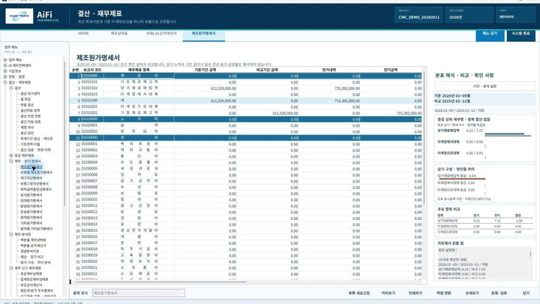
CMC TECH · Accounting · Management37 / 41
CMCTECH · SOLUTION PROPOSAL

Connecting manufacturers’ financial questions to operational evidence

Criteria for Connecting Financial Figures with Management Decisions

Connection CriteriaItems to Check
Accounting PeriodCheck Entries and Change History on the Same Basis
AccountCheck Entries and Change History on the Same Basis
DepartmentCheck Entries and Change History on the Same Basis
ProductCheck Entries and Change History on the Same Basis

Financial Figures and Management Decisions · Meaning and Judgment

Even when sales increase, profit and cash may move in different directions. Sales mix, material costs, work in process and finished-goods inventory, and the timing of receivables collection must be examined separately to reduce the risk of attributing different causes to the same figures.

The core of the CMC-AiFi proposal is to make management questions more specific while maintaining the evidence in vouchers, ledgers, and closing. Explanations provided by AI must be based on the queried period and criteria, and production, purchasing, and sales data should be checked further before operational causes are stated definitively.

Drill down from summary figures to the ledger or aggregation basis to confirm that the same result can be reproduced, and review AI interpretations separately from the calculation grounds.

Order of On-Site Implementation and Acceptance Testing

  1. Confirm the Roles of Accounting, Costing, Sales, and Management
  2. Reconcile Accounting-Period Criteria and Source Records
  3. Confirm Exception Handling and Approval Evidence
  4. Validate Results Using a Representative Case

Financial Figures and Management Decisions · Execution and Validation

When using an existing FI, first compare the account structure, management items, and report classifications. Data migration, external accounting integration, and company-specific user permissions are validated within the implementation scope.

When reviewing “Connecting manufacturers’ financial questions to operational evidence” in this chapter, accounting periods, accounts, departments, products, business partners, and cost allocation criteria must be interpreted using the same standards. The people responsible for accounting, costing, sales, and management review not only the values they enter, but also the information received from the preceding step and the status to be passed to the next step.
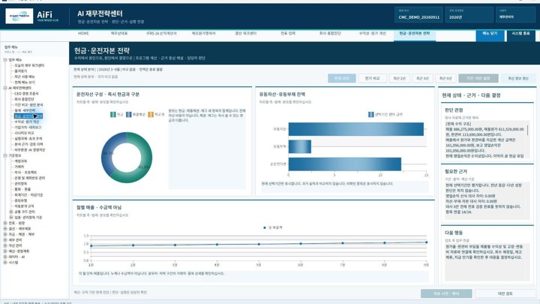
CMC TECH · Accounting · Management38 / 41
CMCTECH · SOLUTION PROPOSAL

Reviewing AI responses using figures and evidence · 1

Comparison with Business Standards

Review areaEvidence to verify
FiguresReconcile the ledger with the financial statements
PeriodCurrent month · cumulative total · comparison year
PermissionsSeparate data by company and business function
AI explanationDistinguish between calculations, estimates, and items requiring confirmation

Financial Figures and Management Decisions · Meaning and Judgment

A response that naturally answers a question cannot replace accounting verification. First confirm that reported amounts match the ledger, that the comparison period and cumulative/current-month bases are consistent, and that unapproved vouchers are not included.

Check whether data remains segregated when the same question is submitted using permissions for another company. Unsupported estimates of causes must not be presented as facts; they should be distinguished as hypotheses requiring further verification, together with the necessary data.

Drill down from summary figures to the ledger or aggregation basis to confirm that the same result can be reproduced, and review AI interpretations separately from the calculation grounds.

Order of On-Site Implementation and Acceptance Testing

  1. Confirm the Roles of Accounting, Costing, Sales, and Management
  2. Reconcile Accounting-Period Criteria and Source Records
  3. Confirm Exception Handling and Approval Evidence
  4. Validate Results Using a Representative Case

Financial Figures and Management Decisions · Execution and Validation

Initial review questions include increases and decreases in sales and profit, changes in manufacturing costs and inventory, cash and receivables collection, and omissions in account classification. Users and accounting personnel must be able to reproduce the answer using the same criteria.

The review items for “Figures” are as follows. Evidence to verify: reconciliation of the ledger with the financial statements.

The review items for “Period” are as follows. Evidence to verify: current month, cumulative total, and comparison year.

The review items for “Permissions” are as follows. Evidence to verify: data segregation by company and business function.

CMC TECH · Accounting · Management39 / 41
CMCTECH · SOLUTION PROPOSAL

Reviewing AI responses using figures and evidence · 2

Criteria for Connecting Financial Figures with Management Decisions

Connection CriteriaItems to Check
Accounting PeriodCheck Entries and Change History on the Same Basis
AccountCheck Entries and Change History on the Same Basis
DepartmentCheck Entries and Change History on the Same Basis
ProductCheck Entries and Change History on the Same Basis

Financial Figures and Management Decisions · Meaning and Judgment

The review items for “AI explanation” are as follows. Evidence to verify: distinction between calculations, estimates, and items requiring confirmation.

Changes in profit and loss and changes in cash may move differently. Rather than comparing increases and decreases first, align the period, aggregation scope, and closing status, then interpret the effects of unit price, quantity, mix, and cost separately.

Drill down from summary figures to the ledger or aggregation basis to confirm that the same result can be reproduced, and review AI interpretations separately from the calculation grounds.

Order of On-Site Implementation and Acceptance Testing

  1. Confirm the Roles of Accounting, Costing, Sales, and Management
  2. Reconcile Accounting-Period Criteria and Source Records
  3. Confirm Exception Handling and Approval Evidence
  4. Validate Results Using a Representative Case

Financial Figures and Management Decisions · Execution and Validation

When reviewing “Reviewing AI responses using figures and evidence” in this chapter, accounting periods, accounts, departments, products, business partners, and cost allocation criteria must be interpreted using the same standards. The people responsible for accounting, costing, sales, and management review not only the values they enter, but also the information received from the preceding step and the status to be passed to the next step.
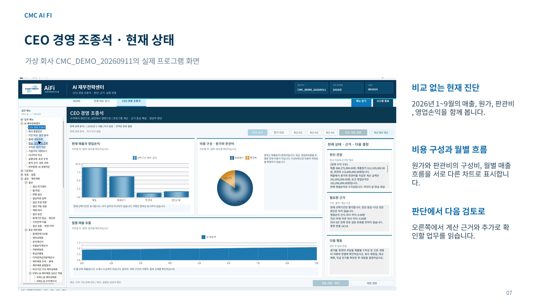
Check cases where changes, cancellations, or omissions occur along with normally processed results. Record where judgments differ among accounting, costing, sales, and management, and agree on who will approve them and based on what evidence. Any automation scope that cannot be confirmed using existing materials should remain an item for review before implementation.

CMC TECH · Accounting · Management40 / 41
CMCTECH · SOLUTION PROPOSAL

Define the first management question for managers to use

Criteria for Connecting Financial Figures with Management Decisions

Connection CriteriaItems to Check
Accounting PeriodCheck Entries and Change History on the Same Basis
AccountCheck Entries and Change History on the Same Basis
DepartmentCheck Entries and Change History on the Same Basis
ProductCheck Entries and Change History on the Same Basis

Financial Figures and Management Decisions · Meaning and Judgment

For the initial implementation, select an actual management question rather than showing all features at once. For example, investigate why operating profit declined despite increased sales by breaking down the income statement, costs, and inventory changes for the same period.

Rather than making an immediate cost-reduction decision based on the answer, the responsible personnel review the consistency of accounting treatment, product mix, one-time factors, and whether operations have changed. Distinguish verified facts from assumptions under investigation and connect them to the next action items.

Drill down from summary figures to the ledger or aggregation basis to confirm that the same result can be reproduced, and review AI interpretations separately from the calculation grounds.

Order of On-Site Implementation and Acceptance Testing

  1. Confirm the Roles of Accounting, Costing, Sales, and Management
  2. Reconcile Accounting-Period Criteria and Source Records
  3. Confirm Exception Handling and Approval Evidence
  4. Validate Results Using a Representative Case

Financial Figures and Management Decisions · Execution and Validation

Define performance indicators as verifiable items, such as report preparation time, items requiring reconciliation, unclassified data, and the completion rate of follow-up actions. Agree on targets after confirming the quality and scope of the initial data.

When reviewing “Define the first management question for managers to use” in this chapter, accounting periods, accounts, departments, products, business partners, and cost allocation criteria must be interpreted using the same standards. The people responsible for accounting, costing, sales, and management review not only the values they enter, but also the information received from the preceding step and the status to be passed to the next step.